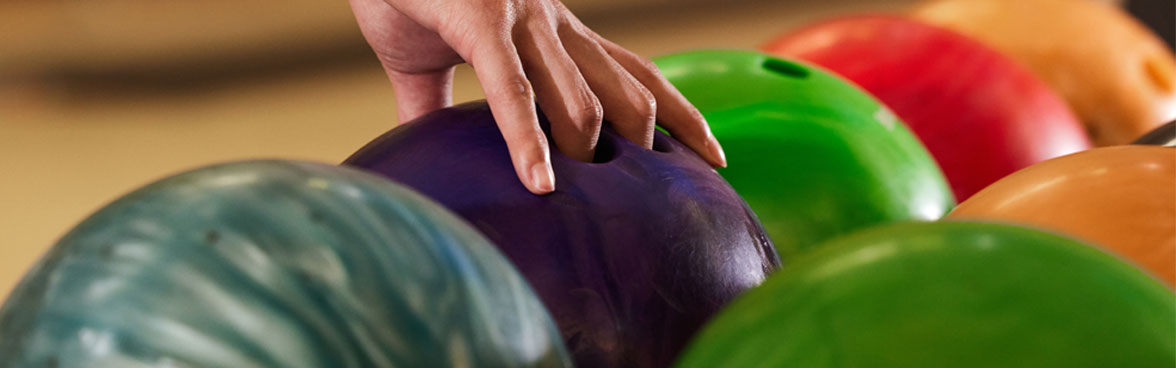
In many bowling ball factories, the same scene plays out every day:
experienced operators stand beside the casting machine, constantly watching material temperature, manually adjusting flow rates, and occasionally tapping pipelines to prevent blockage.
It is not that manufacturers resist automation. The reality is that many so-called “automatic” machines are difficult to tune, unstable in operation, prone to breakdowns, and generate high scrap rates.
The challenge becomes even more apparent when customers demand high-rebound cores, colored surface layers, or asymmetrical weight block designs. Under these conditions, conventional polyurethane casting equipment often reaches its limits. You may have purchased a “PU casting machine,” yet you still find yourself fighting air bubbles, delamination, and uneven curing on a daily basis.
So where does the real problem lie?
It is not inferior raw materials.
It is not insufficient operator skill.
It is equipment that fails to truly understand the process logic of polyurethane in bowling ball manufacturing.
Feilong’s Answer: Not a “Universal Machine,” but PU Equipment Designed Specifically for Bowling Balls
Feilong Polyurethane Equipment has always focused on one core objective:
to break down the molding process of polyurethane elastomers for high-precision products into fully controllable variables.
Bowling balls are a textbook example of high-precision PU elastomer products. They require:
- Uniform density
- Zero internal stress
- Stable hardness
- Highly consistent performance from batch to batch
This is exactly the domain where Feilong’s more than 20 years of technical accumulation delivers its greatest value.
Feilong equipment is not designed to simply “inject material into a mold.” Instead, it builds a closed-loop control system around three critical factors:
- Material rheology
- Reaction exotherm curve
- Mold thermal conductivity efficiency
A Practical Example from the Production Floor
With conventional equipment, the A/B components may begin gelling within 30 seconds after mixing. If pipeline temperature fluctuates by just ±5°C, the reaction rate shifts noticeably. The result is inconsistent density between the front and rear sections of the core — one of the key reasons some bowling balls exhibit unstable or drifting trajectories on the lane.
Feilong’s system automatically compensates for:
- Ambient temperature changes
- Variations in raw material batches
It dynamically fine-tunes preheating temperatures and injection timing, while integrating vacuum degassing and pressure-assisted filling. This ensures that every bowling ball develops uniformly — from the core to the outer shell — with no hidden defects.
Why Feilong Can Commit to the Highest Yield and the Lowest Failure Rate
- Patented technologies with real purpose From anti-crystallization metering pumps to self-cleaning mix heads, all core components are independently developed and optimized for high-viscosity, high-reactivity PU systems.
- CE and ISO 9001 dual certification Compliance extends beyond domestic standards to meet EU safety requirements, making Feilong equipment suitable for international customers and factory audits.
- Process involvement from the pre-sales stage Equipment must adapt to your complete process flow — not the other way around. Feilong integrates equipment selection with your product design and production logic from day one.
Final Thought: Equipment Investment Is an Investment in Certainty
As manufacturing margins continue to tighten, a single equipment selection mistake can lead to months of wasted capacity, customer attrition, and missed market opportunities.
Choosing a partner like Feilong — one that understands materials, masters equipment engineering, and is willing to integrate deeply into your production line — is, fundamentally, an investment in stable delivery of consistently high-quality products.