 FEILONG PU MACHINE

What Configurations and Compliance Requirements Matter for Exported Casting Equipment
Wenzhou Feilong Polyurethane Equipment Engineering Co., Ltd.
Chinese website: http://www.pumcn.com/
English website: https://www.flpumachine.com/
Domestic casting machines and export-order casting machines look similar, yet differ greatly in component selection, design standards and delivery documentation. Domestic units follow local Chinese working conditions; export units must simultaneously meet destination-country electrical codes, explosion-proof rules, environmental regulations, shipping norms and customer site practices.
Many first-time exporters simply add an English label to a domestic model and ship it, only to fail electrical acceptance overseas, fail local explosion-proof inspections, run into customs clearance delays due to missing documents, or face wiring problems on site. The rework cost far exceeds the money saved on configuration. Below are the key configuration and compliance points organized by the actual order-to-shipment workflow.

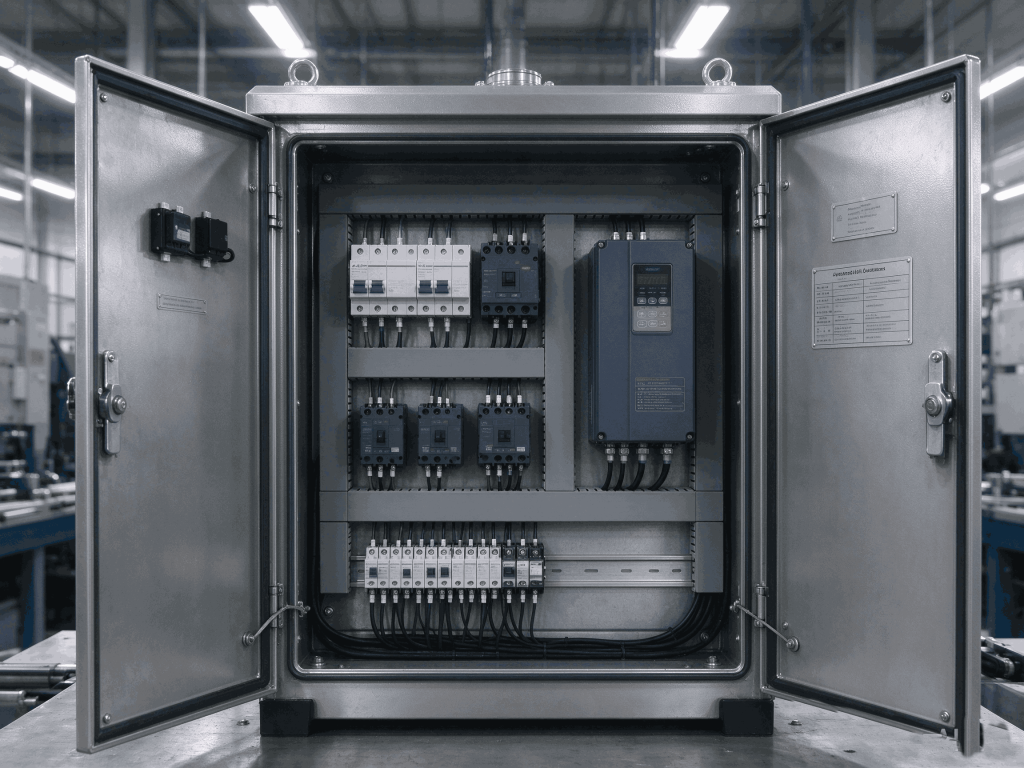
Electrical work is the most common trouble spot for export equipment. Core issues are voltage, frequency, code system and protection rating.
1.1 Voltage and frequency must match the site
Most EU and Southeast Asian countries use three-phase 380V at 50Hz;
North America commonly uses 480V at 60Hz or 220V at 60Hz; Japan uses 200V at 50/60Hz; Australia uses 415V at 50Hz;
Control circuit voltage, inverter supply and servo supply must be matched together, not only the main motor. At order stage, confirm incoming voltage, frequency, phase count and tolerance range. Transformers, inverters and contactor coils must be ordered accordingly and tested with simulated power before shipment.
1.2 Standards and certification systems differ
For EU shipments, consider CE compliance including Low Voltage Directive and EMC Directive;
For North America, prefer UL or CSA certified components; cabinet wiring, trunking and conductor sizing should follow NFPA 79;
Circuit breakers, contactors, relays and power supplies should come from internationally recognized brands accepted by local inspectors, avoiding rejection during supervision acceptance.
1.3 Protection rating and site environment
Casting workshops contain dust, solvent vapor and occasional washing. Export cabinets should be at least IP54; wet washing areas should use IP55 or higher. Operator panels need sealed membrane protection and emergency stops; grounding bars, leakage protection and phase sequence relays must be complete. Because overseas labor costs are high, any electrical shutdown causes amplified losses.
2. Explosion-Proof and Safety Compliance: Raw Material Conditions Determine Electrical Selection
Polyurethane casting involves MDI, TDI premixes and polyol systems with flammable vapor and powder dust. Explosion-proof design is a mandatory evaluation item before order acceptance, not an optional extra.
2.1 Clarify the classified hazardous zone. Determine whether motors for tank agitation, level sensors, level transmitters and heating elements require explosion-proof rating according to Zone 1 or Zone 2;
2.2 Explosion-proof components must be traceable. Motors, push-button boxes and junction boxes must carry valid Ex certificates; never fit ordinary motors with fake explosion-proof nameplates;
2.3 Safety interlocks cannot be omitted: audible and visual alarms plus interlocked stop must trigger when the mixing head is not returned, the material cover is open, temperature or pressure exceeds limits, or agitator overload occurs. Emergency stop buttons should be placed at least at the operator station, head station and control cabinet;
2.4 Chemical safety information must be included in manuals: material hazards, ventilation requirements, personal protective equipment and emergency response, matching customer EHS audit expectations, especially in European and American markets.
Export orders cover a wide range of formulations and customer habits. Wrong material selection leads to leakage, corrosion and buildup that are hard to correct overseas.
3.1 Wetted component materials
Standard tanks and pipelines use 304 stainless steel; upgrade to 316L for corrosive materials, food-contact products or higher hygiene requirements;
Pump bodies, mixing head valve bodies and seal faces use hardened alloys or tungsten carbide liners based on slurry abrasion;
Weld inner surfaces should be ground and polished to reduce material traps and ease color and formula changes.
3.2 Seals must be compatible with solvents
Common nitrile seals do not withstand isocyanates and certain polyol systems. Export models should uniformly use fluororubber or PTFE-encapsulated seals. Spare dynamic seals and cleaning circuit seals should be included because customers may not source identical models locally.
3.3 Environmental and material compliance
EU shipments should check REACH restricted substances for resins, raw materials and consumables; packaging wood must comply with EU wood regulations. For North America, follow GHS labeling requirements for chemical storage; interface labels on equipment should be clear and bilingual where required.
4. Core Component Selection: Prefer Globally Available Brands for Overseas Spare Parts
Domestic machines can use local-cost pumps and valves, but export machines should prioritize local availability and fast repair.
4.1 Metering and power components: gear pumps, plunger pumps, inverters and servo motors should use brands common in Europe, Japan or North America, with models listed in the spare parts sheet;
4.2 Pneumatic and hydraulic components: solenoid valves, cylinders, regulators and proportional valves prefer Festo, SMC, Parker or Bosch Rexroth to avoid long spare parts waiting by sea;
4.3 Instruments: pressure and temperature transmitters and flow meters use standard signal formats (4-20mA or standard communication interfaces) with English range labels;
4.4 Control system: PLC and HMI should use globally common models; program comments and screen operation language should support English (Arabic or Spanish can be reserved in advance for Middle East and Southeast Asian customers). Data logging and recipe export are often required for traceability in export batch orders.
5. Documentation Compliance: Customs Clearance, Acceptance and Training Depend on It
Incomplete documents cause customs delays or customer rejection. Prepare the following before shipment:
5.1 Machine documents: CE declaration of conformity or destination compliance statement, factory certificate, packing list, commercial invoice, HS code classification materials;
5.2 Technical documents: electrical schematics, pneumatic and hydraulic diagrams, general arrangement drawings, wearing parts list, recommended spare parts list, Chinese-English operation and maintenance manual;
5.3 Acceptance documents: FAT report (including ratio accuracy, temperature uniformity and continuous running records), factory photos and videos, tooling list;
5.4 Training materials: safety operation procedures, troubleshooting table, recommended consumable models, plus commissioning videos when needed;
5.5 Nameplates and labels: English nameplate with model, voltage, power, manufacture date, serial number and manufacturer; pipelines labeled A material, B material, cleaning solvent and compressed air with clear flow arrows.
6.1 Site adaptability
Consider container dimensions and lifting methods; split long pipelines and independent frames for field assembly;
Reserve anchor bolt dimensions, exhaust direction and maintenance space according to customer site drawings; confirm thread standards in advance (G thread vs NPT thread; North America commonly uses NPT);
Hydraulic station and cooling system should be sized for local water temperature and ambient conditions.
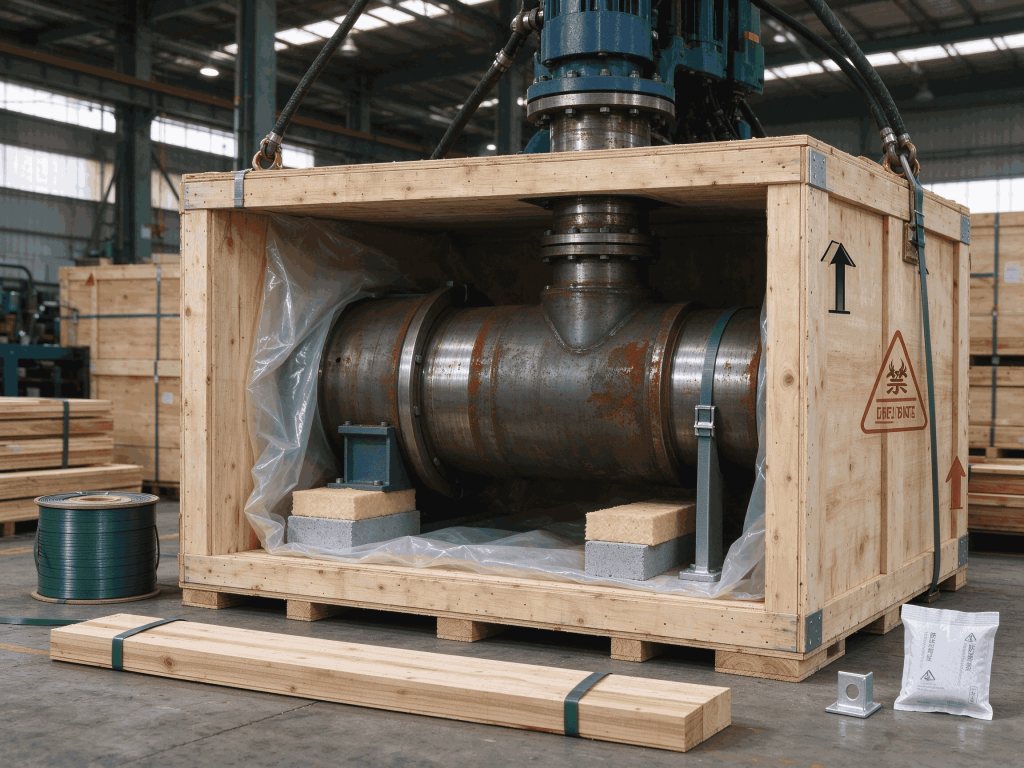
6.2 Seaworthy packing rules
Export wooden cases must be fumigated or made of fumigation-free plywood with IPPC marks;
Exposed machined surfaces receive anti-rust oil and moisture-proof film; desiccant bags go inside electrical cabinets; precision instruments and vacuum pumps use separate shock-proof packing;
Flanges and open ends are blanked to prevent moisture and insects;
External markings include consignee, port of destination, contract number, center of gravity, lifting points, fragile, keep dry and this way up.
6.3 Shipping and insurance
Clarify FOB, CIF or DDP terms and recommend marine cargo insurance. Book vessel schedules and container types in advance for oversized units and verify destination port weight limits.
7. Process Adaptation and After-Sales Support: Long-Term Competitiveness of Export Equipment
The often-overlooked link is process and service handover. Overseas commissioning cycles are long and labor expensive, so predictable issues should be resolved before dispatch.
7.1 Pre-shipment process validation: run trial casting with the customer’s actual raw material model and formula; record temperature, ratio and cycle parameters into a process card sent with the machine;
7.2 Site condition checklist: foundation load, power capacity, compressed air pressure and cleanliness, ventilation, fire protection and chemical storage location, confirmed with the customer before shipment;
7.3 Remote support capability: reserve remote communication modules in the control system or provide video guidance solutions; ship one extra set of wearing parts such as seals, filters, heating elements and fuses;
7.4 Service terms: define warranty period, spare parts supply years and remote response time; export customers value long-term stability more than the lowest one-time price.
8. Export Order Self-Check List
8.1 Confirm destination voltage, frequency, electrical codes and certification requirements;
8.2 Evaluate hazardous area and define Ex ratings for motors, instruments and push buttons;
8.3 Verify wetted and seal materials against the customer’s raw material system;
8.4 Confirm whether main purchased components are globally available brands;
8.5 Complete document package (certificates, drawings, manuals, FAT report, spare parts list);
8.6 Packing meets fumigation, moisture-proof, shock-proof and marking requirements;
8.7 Site foundation, air supply, power supply and ventilation conditions confirmed in advance;
8.8 Trial casting records and random spare parts shipped together.
Closing
The competitiveness of export casting equipment is not only that it can discharge material, but that it runs stably on site, passes local acceptance, can be serviced with available parts, and comes with understandable documentation. By solidifying electrical compliance, explosion-proof safety, material sealing, component selection, documentation, packing and process support in advance, exporters quote with confidence and reduce after-sales disputes.