 FEILONG PU MACHINE

Why Standard Metering Pumps Easily Get Clogged With Filled Polyol (Calcium Carbonate, Aluminum Hydroxide)
Wenzhou Feilong Polyurethane Equipment Engineering Co., Ltd.
Chinese website: http://www.pumcn.com/
English website: https://www.flpumachine.com/
Many polyurethane manufacturers add inorganic fillers such as calcium carbonate and aluminum hydroxide into polyol to cut material cost, improve hardness and flame retardancy of finished parts.
The equipment runs smoothly with unfilled raw materials. Once fillers are added, standard metering pumps frequently experience unstable flow, jamming and clogging. Operators spend a lot of time disassembling and cleaning pumps. Some factories simply enlarge filter screens, yet clogging still occurs together with poor metering accuracy.
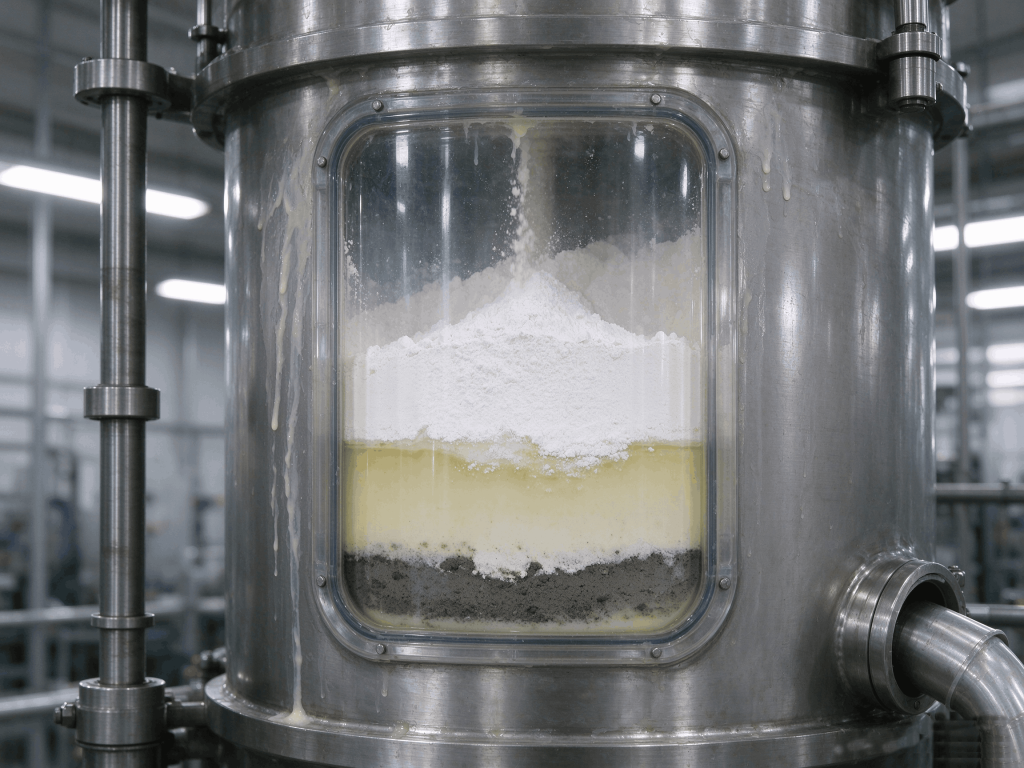
Calcium carbonate and aluminum hydroxide are hard inorganic powders, which behave very differently from neat polyol. First, these fillers have high specific gravity and settle rapidly. If agitation is insufficient or the system stops for a period, solid powder accumulates at tank bottom, suction port and low points of pipelines. When restarting, sediment rushes into the pump and triggers blockage directly. Second, filler particles are abrasive. Hard particles continuously scour gear clearances and sealing surfaces. Standard gear pumps are manufactured with tiny internal clearances. Trapped particles jam the gears and wear components quickly. Clearances become larger after abrasion, and dosing accuracy drifts gradually. Third, filled polyol shows obvious thixotropy. It thickens under static condition and brings high flow resistance. Powder tends to stick on pipe walls and pile up at low flow speed.
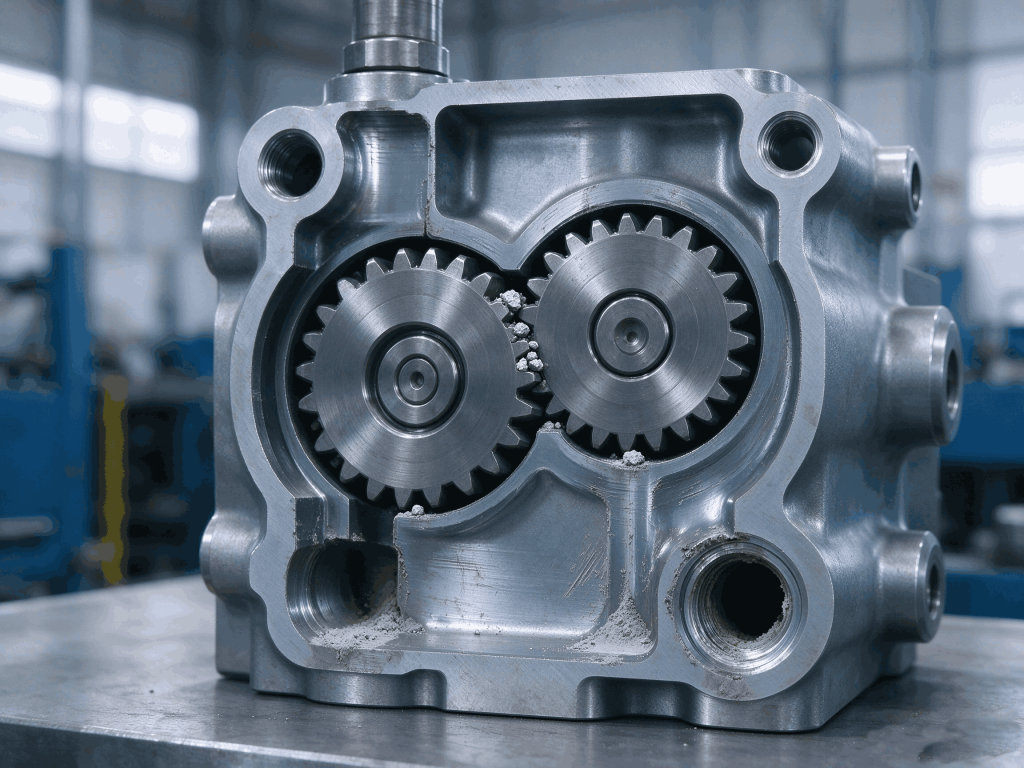
Conventional metering pumps are developed for clean polyol and isocyanate without solid fillers. They feature narrow flow passages, tight clearances and compact seals.
2.1 Narrow channels and sharp corners create dead zones where powder accumulates step by step.
2.2 Minimal gear meshing clearance is critical for clean fluid metering, but hard particles trapped between gears cause overload or rotor locking.
2.3 Precision mechanical seal faces are easily scratched once fine powder enters, leading to leakage and further particle accumulation.
2.4 Most standard pumps do not come with built-in circulation loop. Material stays static inside pump cavity after shutdown, and fillers settle down immediately.
3. On-site operation factors worsen clogging
3.1 Inadequate tank agitation; stirring stops during standby time
3.2 Improper suction piping: small pipe diameter, excessive elbows and high suction lift
3.3 No circulation or auto-cleaning after shutdown
3.4 Poor powder dispersion, large agglomerates entering the pump
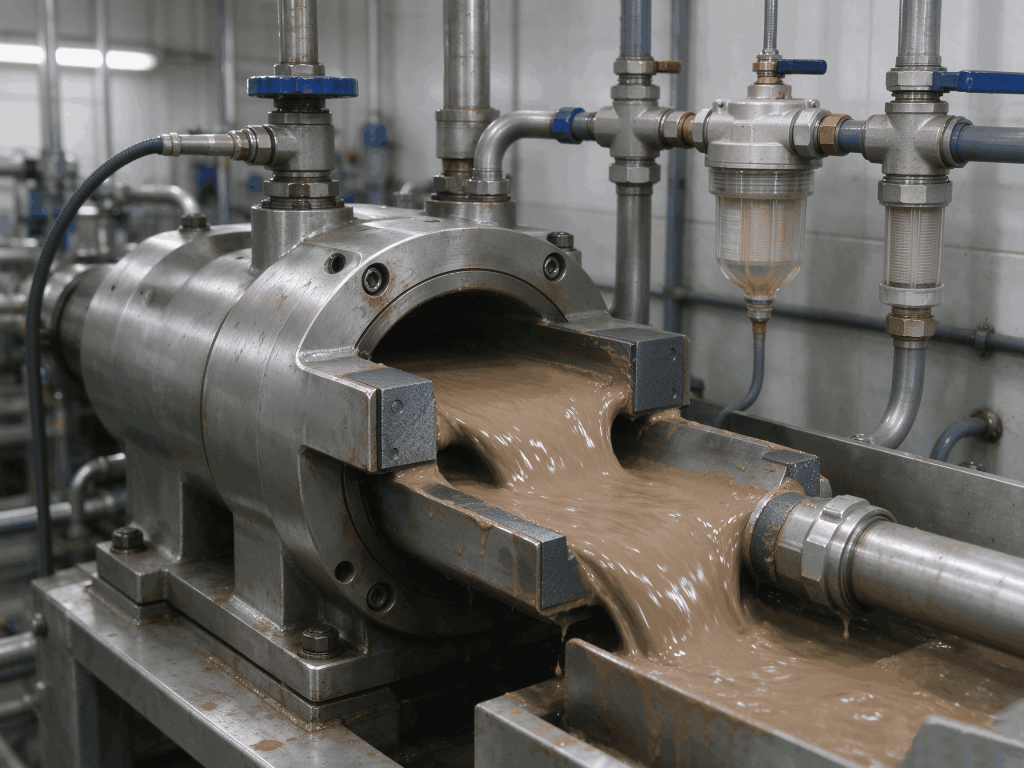
Clogging cannot be solved only by replacing filters. Optimize the whole feeding system:
4.1 Select special abrasion-resistant metering pumps for slurry, with widened flow path and tungsten steel wear parts;
4.2 Equip the raw material tank with continuous anchor agitator to prevent sedimentation during standby;
4.3 Build circulation loop to keep slurry moving without static settlement;
Adopt two-stage filtration to block large agglomerates;
4.4 Stable temperature control keeps proper viscosity and reduces wall adhesion;
Add automatic solvent cleaning after production shift.
5. Conclusion
Clogging with calcium carbonate and aluminum hydroxide filled polyol is not just a filter problem. It comes from the combination of powder settlement and unsuitable tight-clearance pump structure, plus progressive abrasive wear. For stable mass production of high-filled polyurethane products, avoid running standard metering pumps under this harsh condition. Customized metering systems designed for filled formulations help reduce downtime, maintain stable mixing ratio and improve finished product yield.