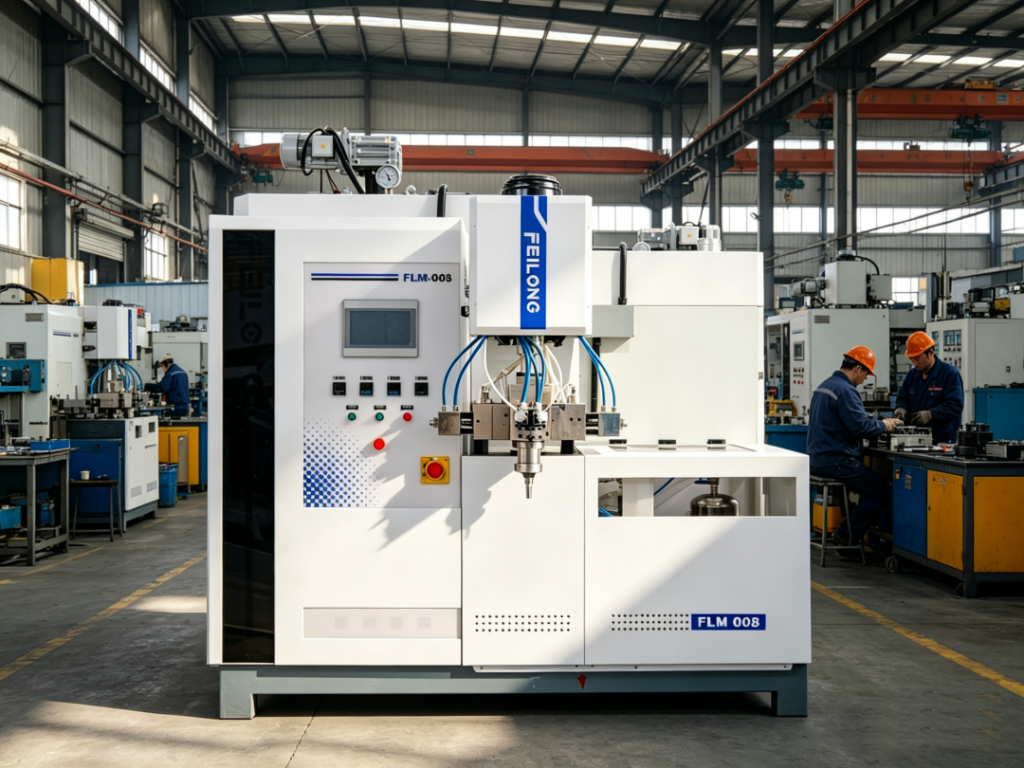
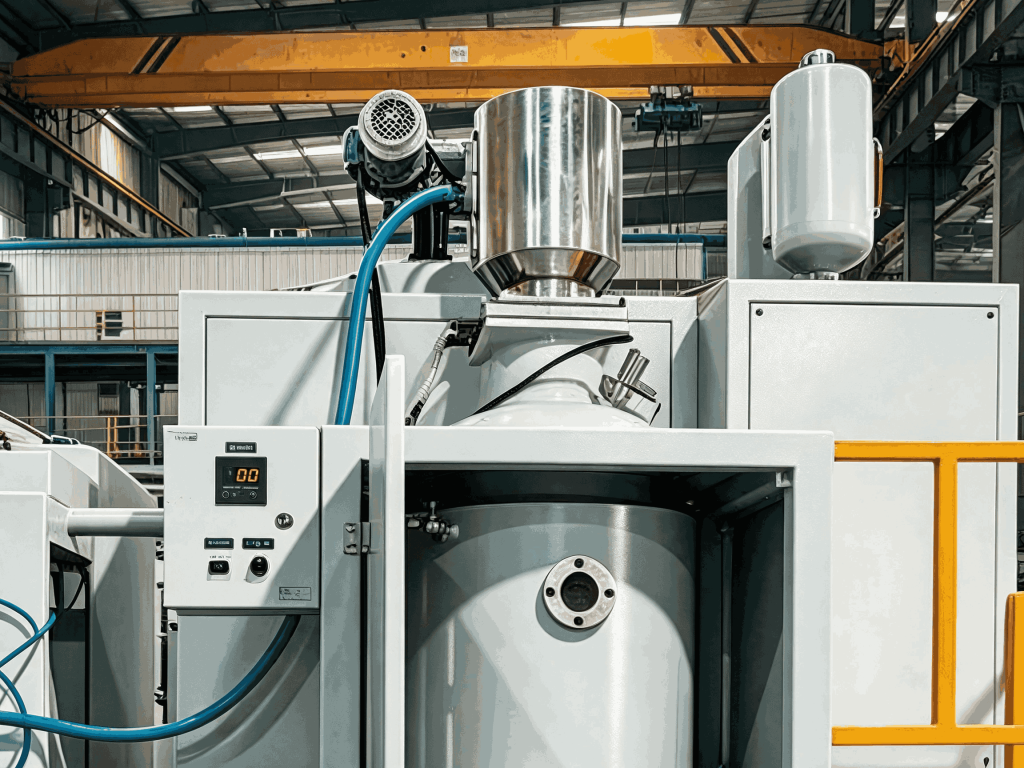
The CPU20F high-temperature elastomer casting machine is a core device for producing polyurethane elastomer products. Designed with high product yield and low operational failure rate as key objectives, the equipment ensures stable mass production through four core capabilities: precise metering, uniform mixing, constant temperature control, and bubble-free molding. This article concisely outlines the design principles, core structure, standard operating procedures, and key points for process optimization, making it suitable for both practical production use and technical education.
(Image: AI-generated image)
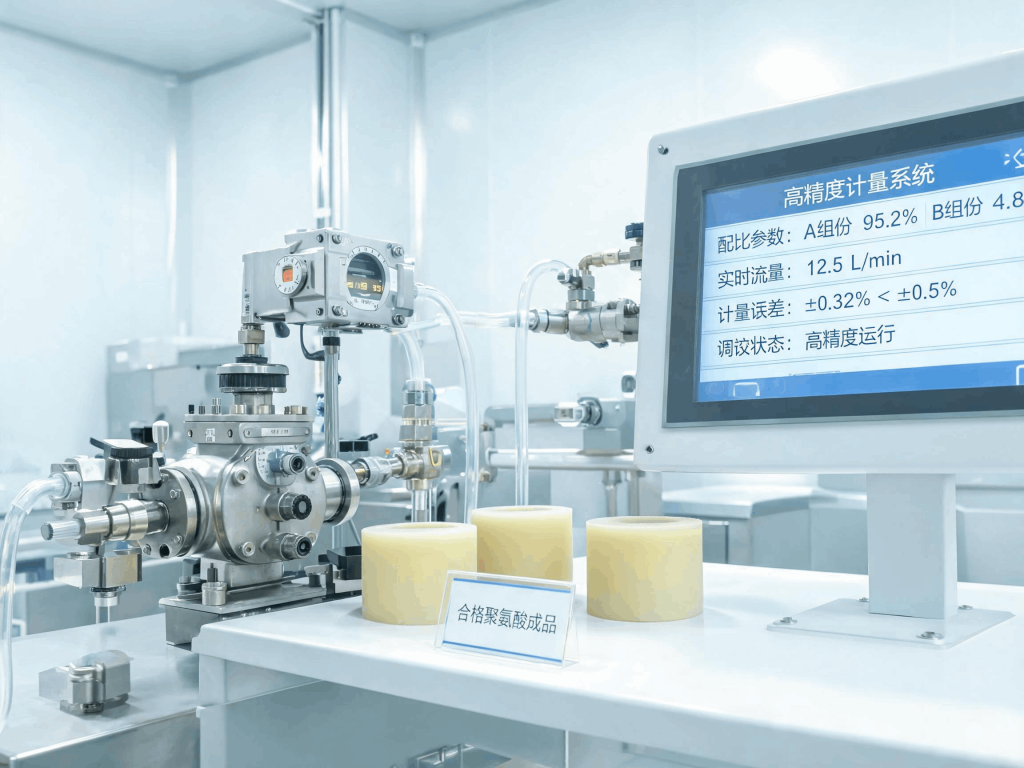
I. Core Design Standards for Equipment The high-quality molding of polyurethane products is ensured by four key elements: qualified raw materials and scientific formulation processes, high-precision specialized equipment, compatible production molds, and standardized and emergency-responsive operation methods. Among these, the hardware performance of the equipment is the foundation of quality, and a high-quality high-temperature elastomer pouring machine must meet four strict criteria: precise measurement, uniform mixing, stable temperature, and no macroscopic bubbles during molding. II. Principles, Parameters, and Practical Techniques of the Measurement System The measurement system is the core module that determines the accuracy of product ratios and eliminates defective products. The equipment’s accuracy has been optimized and calibrated, and under normal operating conditions, the measurement error is less than ±0.5%.
Core influencing factors of measurement accuracy Feed and filtration system: The viscosity of material A changes significantly with temperature. It is possible to appropriately increase the temperature and reduce the viscosity without affecting the service life of the raw materials, which is conducive to stable material supply. When the viscosity is greater than 2000 cps, stable pressure nitrogen gas of less than 0.03 Mpa can be introduced to achieve balanced material supply by the metering pump. The core raw material MOCA of material B is in a solid state at room temperature and has a melting point of 100-109℃. The more impurities the raw material has, the lower the melting point. It is necessary to completely melt it into a low-viscosity liquid before it can be put into production on the machine. Transmission and digital display hardware: Equipped with low-speed high-precision dedicated metering pumps, precise driving mechanisms and speed digital display devices, the hardware accuracy ensures the stability of measurement from the root. Pipeline pressure system: The resistance of the feeding and reflux pipelines is constant, and the pressure adjustment is sensitive, ensuring the balanced and undisturbed supply pressure throughout the process. Parameter configuration of the entire CPU20F series models Standard Operating Procedures Heating of raw materials: Through the forced circulation system of heat transfer oil, the A and B raw materials are uniformly heated to the set process temperature. Synthesis of pre-polymer: The polyurethane pre-polymer synthesis reaction can be completed directly in the A material tank, adapting to different production process requirements. Loading operation: The A material can be loaded from the top loading port, and large-sized products can be continuously supplied through the bottom reflux port to increase the pouring volume; after loading, vacuum degassing must be carried out in steps, first degassing in the tank and then the entire machine for degassing, completely preventing air leakage. The vacuum pump must be started after closing the material tank valve to prevent the vacuum pump oil from backflowing and damaging the equipment. B material and pigment and other auxiliary materials are recommended to be melted and stirred uniformly outside the tank before being added to the B tank to avoid uneven mixing. Return flow circulation: Start the metering pump, adjust the return flow regulating valve and throttle plate to make the A and B material return pressure basically balanced, stabilizing the supply state. Continuous pouring: Preheat multiple molds in advance to achieve uninterrupted pouring, and after completion, the equipment is automatically completed by computer program control for air flushing and liquid washing. Long-term shutdown maintenance: For long-term shutdown, DOP must be used to thoroughly clean the entire A material system to prevent the solidification of raw materials from blocking the pipeline and jamming the pump body. Metering and Ratio Adjustment Technology The pumps A and B of the equipment are configured with fixed volume ratios (Type II/Type III 100:12). Due to the influence of raw material density and pipeline resistance, the operating speeds of the two pumps are different under the same ratio. During production, the pump speed must be calculated according to the product specifications and formula ratio, and all parameters must be based on the actual measured flow rate. At the same time, the speed range of the pump body must be strictly controlled. For high-viscosity pre-polymer, the speed should be appropriately reduced or the diameter of the throttle plate should be increased to avoid pipeline overpressure shutdown. Example of pump speed calculation (CPU20F-III type): A pump displacement is 50 c.c./rev, B pump displacement is 6 c.c./rev, total pouring volume is 4 kg/min, A material density is 1.05, B material density is 1.22, weight ratio is 100:12. After calculation, the optimal speed of A pump is 68 r/min, and the optimal speed of B pump is 58.5 r/min (take 59 r/min), and after debugging, the actual flow rate should be adjusted and corrected accordingly. Optimal mixing ratio calibration: The mixing ratio is the core parameter of the product quality, and the error of total pouring volume has a very small impact on the performance of the finished product. Mechanical pouring should be different from manual mixing. Through multiple sample debugging, the optimal ratio is calibrated. The conventional adjustment method is to fix the speed of the B pump and slightly adjust the speed of the A pump, relying on the high-precision adjustment characteristic of the A pump, to lock in the best performance ratio of the product.
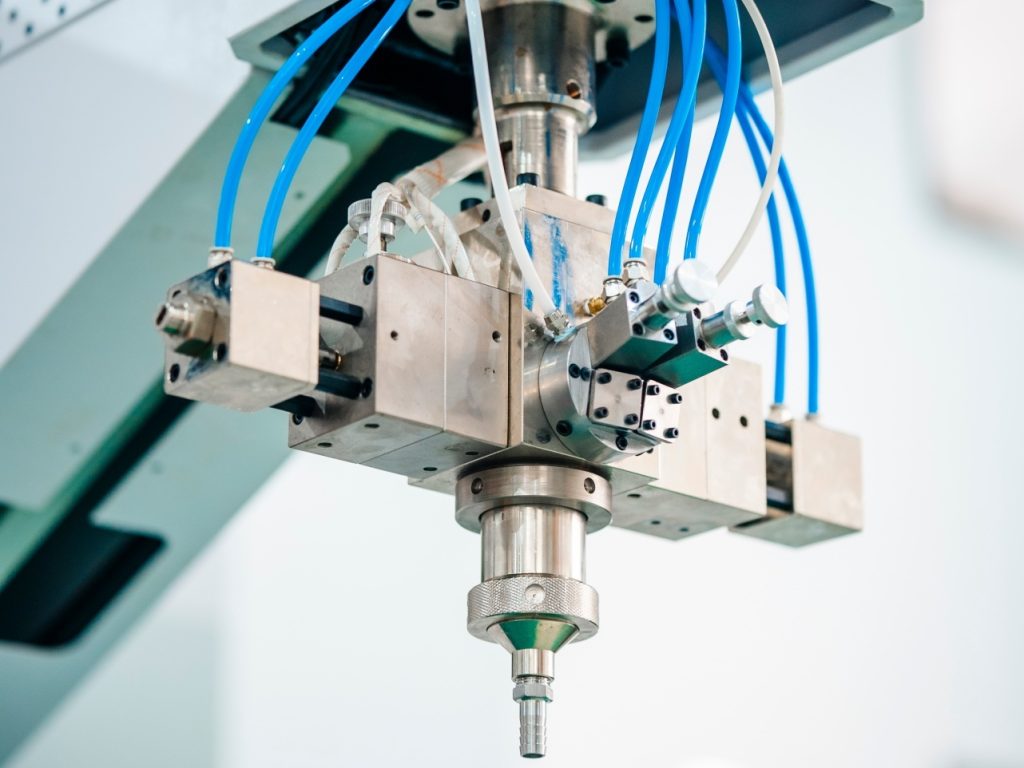
III. Structure and Operating Specifications of the Mixing Pouring Head The pouring head is the core unit for material mixing and forming, integrating functions such as switching, pressure regulation, stirring, cleaning, and constant temperature insulation to ensure uniform material mixing, no bubbles, no residues, and no leakage. Core Structure Principle Pouring-Recirculation Switching Device: Utilizes a D63 cylinder and a rack and pinion drive mechanism, with the valve ball rotating precisely at 90° to achieve automatic switching between pouring and recirculation. During pouring, the material passes through a throttling hole into the mixing chamber, and during recirculation, the material flows back from the bottom of the tank. This effectively eliminates bubbles and stabilizes the material temperature. Pressure Regulation Device: Standard working pressure for material A is 0.4 – 0.6 Mpa, for material B it is 0.2 – 0.3 Mpa; the flow rate can be adjusted through the orifice of the throttling plate, with material A at 6 – 8 m/s and material B at 3 – 4 m/s, ensuring pressure balance and uniform mixing. The formula for calculating the orifice diameter: d (mm) = 5√Q/v (Q is the flow rate in L/min, v is the flow velocity in m/s). Stirring Sealing System: Dual-speed stirring at 3500/4500 r/min, equipped with high-precision imported bearings and an integrated detachable sealing structure, combined with precise oil seals, completely preventing the mixing material from backflowing and leakage. Fully Automatic Cleaning Device: Computer-controlled electromagnetic valves, combined with a D50 cylinder for cleaning switches, automatically rinse the mixing chamber with compressed air and cleaning fluid after the machine stops, effectively preventing the backflow of the original liquid into the pipeline and ensuring no residues in each pouring. Conical Tooth-type Mixing Head: Simple and durable structure, uniform stirring, no bubbles, and adjustable outflow hole diameter to change the residence time in the material chamber, suitable for different pouring volumes. The formula for calculating the outflow hole diameter: d (mm) = √Q/v (total pouring volume Q: kg/min, optimal flow velocity v: 0.5 – 1 m/s). Heat Transfer Oil Insulation System: The heat transfer oil circulates with the original liquid for continuous temperature insulation, avoiding defects caused by temperature differences. Key Points for Pouring Head Debugging and Operation No-load trial operation: Check if the equipment operates normally, the switching of working conditions, and the cleaning function are all normal, without noise, jamming, or air leakage; with material operation, verify if there is no leakage, pressure balance, and through multiple short-term flow rate tests to lock in the optimal pump speed; calibrate the cleaning system to ensure that the two holes of the cleaning switch are synchronized for cleaning, and when cleaning is not uniform, replace with a thicker Teflon gasket for debugging. High-speed abnormal noise of the mixing head requires timely investigation of issues such as bent shafts or abnormal clearances.
IV. Constant Temperature Control System Control Technology Temperature stability is the key to the qualified molding of polyurethane elastomers. Abnormal temperature of the B material will directly lead to the deterioration of MOCA and the scrapping of the products. The equipment is equipped with an independent dual-set two-stage forced circulation heating system for A and B materials, ensuring precise temperature control and energy efficiency. Core advantages of temperature control The use of Pt100 platinum probe sensors and time proportional temperature controllers ensures that the temperature of the heat transfer medium is always 5-10°C higher than that of the material. Dual linkage temperature control is implemented. The B material is equipped with a dedicated temperature control safety circuit, and the pump cannot be started if the temperature does not meet the standard. Automatic low-temperature sound and light alarms are triggered to prevent low-temperature production of defective products. The two-stage heating mode ensures that the machine starts with full-speed heating of both tubes, and after 0.5-1 hours of reaching the standard, it automatically switches to single-tube constant temperature control, balancing the heating efficiency and temperature control accuracy. The standard working pressure of the oil pump is 0.1-0.12 Mpa. Standard temperature control parameters A raw material: 60-90°C; A heat transfer medium: 70-100°C; B raw material: 110-120°C; B heat transfer medium: 115-125°C; B metering pump: 105-110°C; Pouring head reference temperature: 70-120°C. If the temperature exceeds the range, heating faults need to be checked.
(Image: AI-generated image)
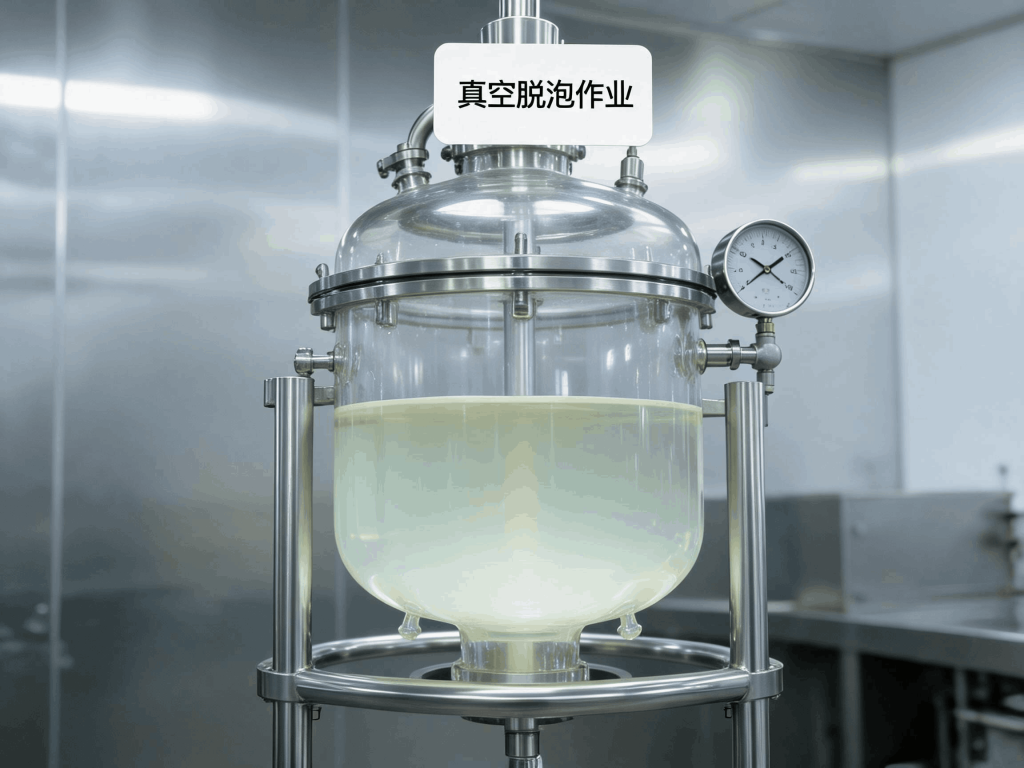
V. Causes of Product Bubble Defects and Elimination Solutions The macroscopic bubbles in the products mainly result from three factors: incomplete degassing of raw materials, equipment leakage of air, and turbulent air intake during pouring. Targeted standardized operations can achieve bubble-free molding. Raw material pre-treatment: Before pouring, the pre-polymer must be fully degassed under vacuum. Only after confirming that the material is free of bubbles can it be put into production. Equipment sealing control: Regularly inspect and clean the switches, stirring shafts, Teflon sealing gaskets, and mixing heads to eliminate system air leakage. Standardized pouring process: Match the appropriate funnel and transparent hose. After the material is completely free of bubbles, pour it into the mold continuously without interruption to avoid air intake during the process. Thorough post-cleaning: After batch production is completed, promptly clean the mixing chamber to completely remove the residual cleaning agents such as dichloromethane and trichloroethylene to prevent bubble defects from being introduced into the material.
VI. Key Points for Process Optimization and Equipment Maintenance Production and maintenance of A material pre-polymer The equipment supports three pre-polymer synthesis methods: external pre-filling of the tank, T+P (isocyanate + polyol) inside the tank, and P+T (polyol + isocyanate) inside the tank. These methods are compatible with the mainstream processes in the industry. The synthesis temperature is strictly controlled at ≤ 80℃, and vacuum degassing takes 10 to 40 minutes to be ready for use. For short-term shutdowns (≤ 3 days), the system can be sealed and filled with nitrogen to prevent moisture absorption and deterioration; for shutdowns longer than 3 days, the materials must be emptied, and the DOP circulation cleaning and pump sealing are required. Daily startup should involve a 20-minute circulation to prevent the pump body from getting clogged. Usage norms for B material and MOCA It is not recommended to install a stirring device in the B tank to avoid MOCA solidification and clogging the equipment, increasing the difficulty of melting the material. All additives such as pigments must be mixed evenly outside the tank before being added to the tank to avoid bubbles and uneven mixing. For regular shutdowns, only sealing the system is required, and there is no need to empty the materials. Regular calibration and maintenance of equipment Cleaning and maintenance of the switch: Each time pouring, make sure to close the cleaning switch tightly to prevent B material from solidifying in the copper pipe and clogging the equipment. Replace the Teflon sealing gasket regularly to ensure the A and B valves are tightly sealed.


 FEILONG PU MACHINE