Search the whole station
Wenzhou Feilong Polyurethane Equipment Engineering Co., Ltd.
Chinese website: http://www.pumcn.com/
English website: https://www.flpumachine.com/
When the temperature drops in winter, many polyurethane casting lines suffer unstable product quality. Many manufacturers focus only on mold temperature while ignoring stable temperature control of raw material tanks. Polyols, prepolymers and curing agents turn much more viscous in cold conditions. If heating and circulation of the tank fail, even unchanged HMI settings will result in batches of defective goods.
We list typical defects caused by insufficient tank temperature control, together with root causes and corrective actions for on-site troubleshooting.
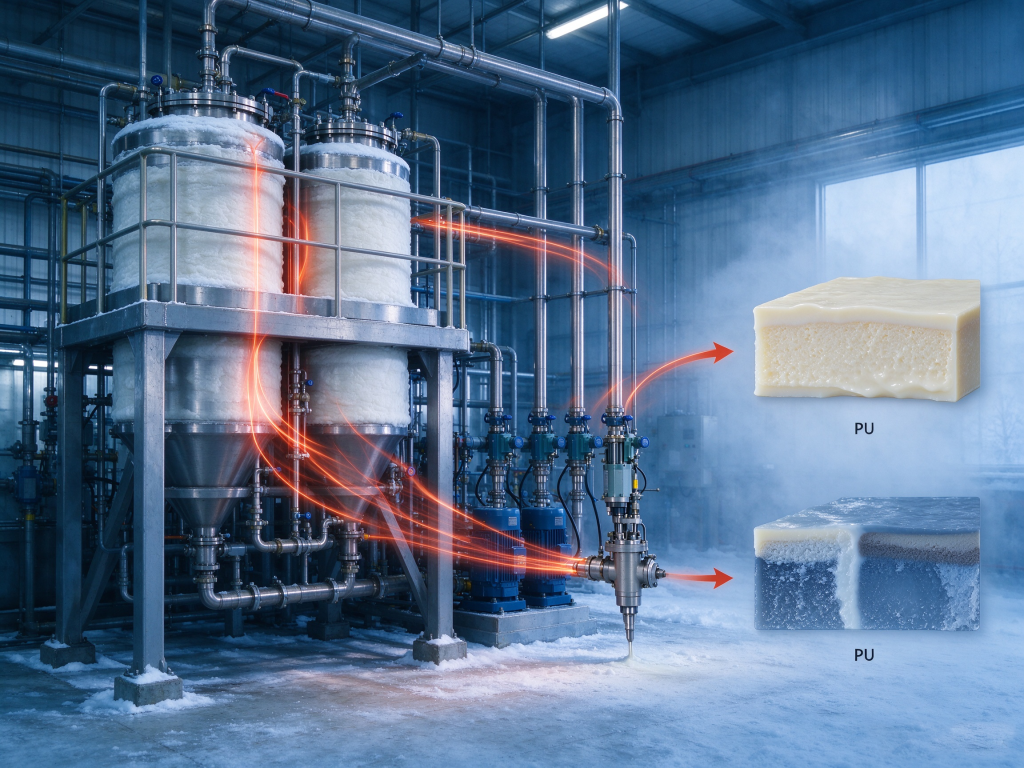
1. Higher Viscosity Causes Unstable Metering and Ratio Drift
Cold raw materials such as polyols and prepolymers gain high viscosity and flow poorly. High-viscosity material leads to internal slip inside metering pumps. The actual flow deviates from set values. Air is easily sucked into suction lines, causing fluctuating flow and A/B ratio drift. Symptoms: inconsistent hardness across batches, uneven color, sticky uncured spots or brittle zones. Fillers like calcium carbonate and aluminum hydroxide settle faster at low temperature and worsen metering fluctuation.
2. Poor Mixing, Streaks and Mottling on Parts
High viscosity at low temperature makes it harder for two components to be sheared and blended evenly inside the mixing head. Symptoms: visible streaks and mottled texture inside or on the surface. Crosslink density varies locally, leading to inconsistent abrasion and rebound performance. Many technicians mistakenly increase mixing speed, while the real root is low material temperature.
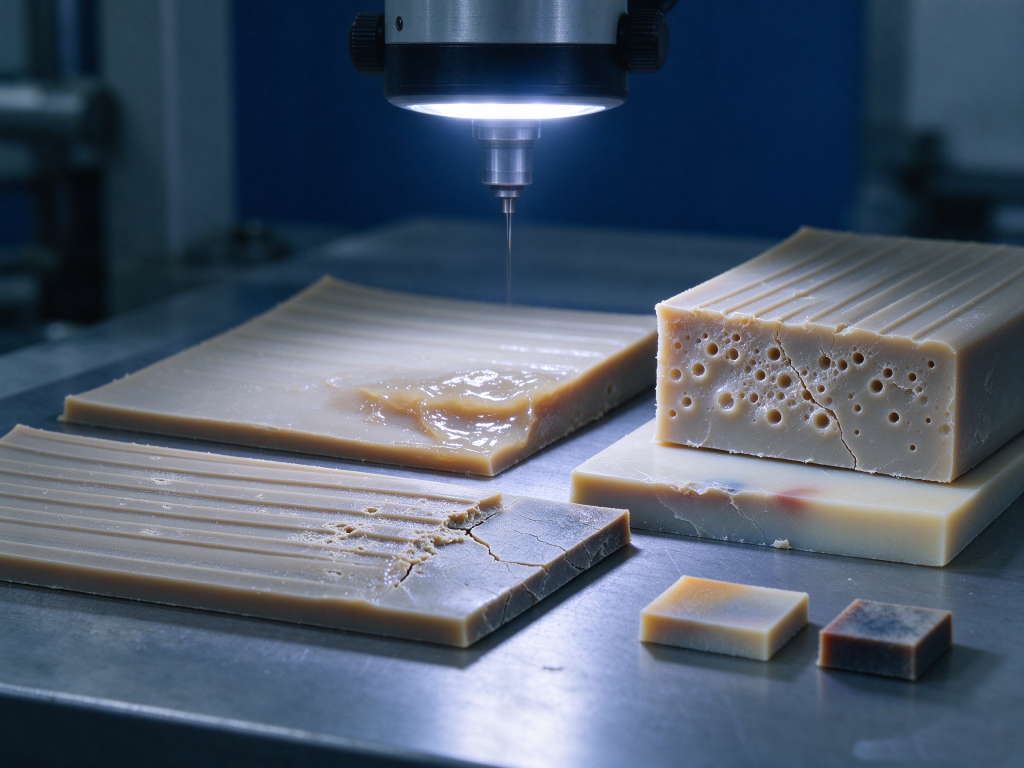
3. Extended Gel Time, Incomplete Curing and Tacky Surface
PU crosslinking reaction relies heavily on material temperature. Cold feed slows down chemical reaction and prolongs gel time. If demolding follows the normal cycle for warm conditions, parts may look shaped but remain under-cured internally. They feel sticky, bleed oil after storage, and have high compression set, which makes wheels and rollers deform easily under load. Longer gel window also increases moisture absorption and bubble risk.
4. More Pinholes and Bubbles
High viscosity traps air bubbles generated during mixing. Slow reaction also extends contact time between isocyanate and moisture in air, producing CO₂ and fine pinholes or subsurface voids. Many factories struggle with winter bubbles even after adjusting mold vents; tank temperature and circulation should be checked first.
5. High Internal Stress, Immediate or Delayed Cracking
Slow reaction from cold material creates abnormal exotherm profiles. Uneven crosslinking builds up heavy internal stress. Parts may look good right after demolding but crack later during storage, low-temperature service or impact load, usually at gates and wall-thickness transition zones. Thick-walled items such as PU wheels and bushings are most vulnerable.
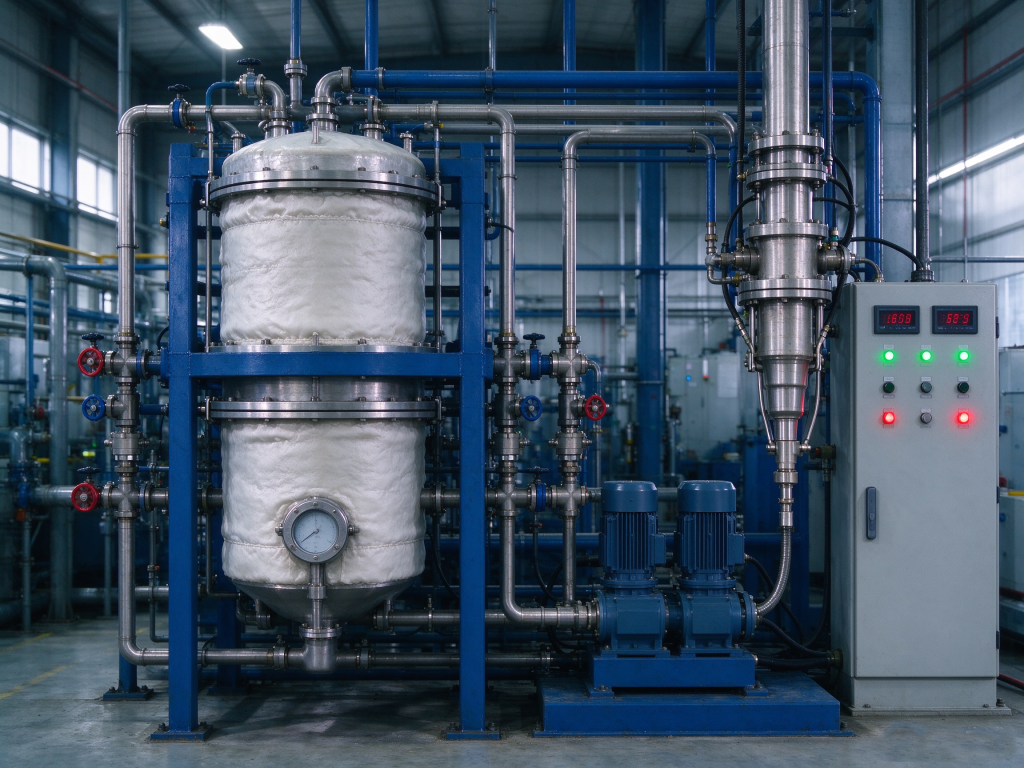
6. Filler Settlement and Poor Batch Consistency
Systems with pigment paste, calcium carbonate or aluminum hydroxide lose suspension stability when cold. Materials settle quickly without continuous circulation and stirring. Concentrated filler at the tank bottom and thin material on top lead to inconsistent composition and varying part performance batch by batch.
7. Practical Tips for Tank Temperature Control in Winter
7.1 Use double-jacket insulated tanks with PT100 sensors for uniform heating and avoid local temperature difference;
7.2 Keep pipeline circulation running continuously to prevent settlement and viscosity stratification;
7.3 Preheat raw materials before production, start pouring only after temperature stabilizes within the process window;
7.4 Increase frequency of gravimetric ratio calibration in cold weather to detect pump slip early;
7.5 Do not compensate high viscosity merely by raising mixing head speed; stable material temperature is the priority.
8. Summary
Raw material tank temperature control is often overlooked in winter PU manufacturing. Low feed temperature triggers a chain of defects: ratio drift, poor mixing, delayed curing, bubbles, cracking and filler settlement. Mold and ambient temperature matter, but stable initial temperature from storage tanks is the foundation of consistent process.
Wenzhou Feilong polyurethane casting machines are equipped with double-layer insulated tanks and constant circulation heating systems. They maintain steady temperature in cold winter conditions, reduce quality fluctuation and support stable mass production of elastomer wheels, air filter parts and carpet backing.
 FEILONG PU MACHINE