Search the whole station
Wenzhou Feilong Polyurethane Equipment Engineering Co., Ltd.
Chinese website: http://www.pumcn.com/
English website: https://www.flpumachine.com/
Many PU casting workshops face the same trouble: even with release agent sprayed, products still stick to molds and are hard to release. Forced mold opening will scratch or tear wheels, rubber rollers and seals. Many operators choose to spray more release agent, yet over-spray causes new defects such as oil stains, bubbles and poor surface quality.
Mold sticking usually does not come from insufficient release agent. The real cause is poor coordination between release agent spraying and casting rhythm. Wrong spraying timing, poor atomization, mismatched flash-off interval, and unlinked casting speed, mold temperature and curing cycle will disable even high-quality release agents.
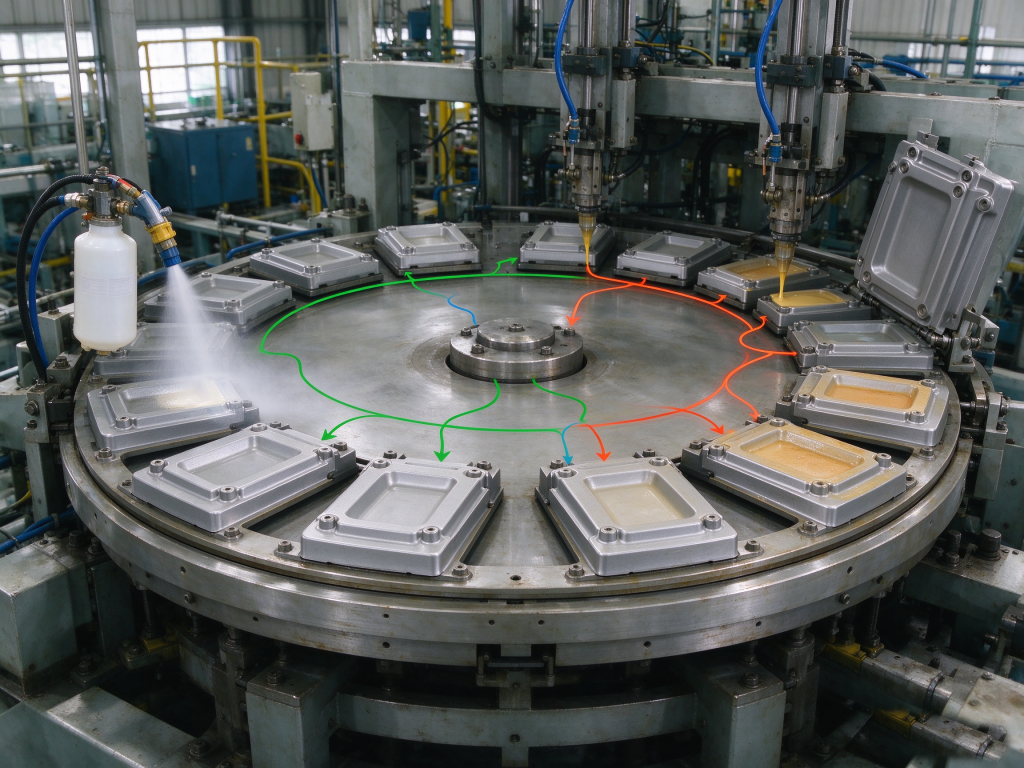
1. Key Control Points of Release Agent Spraying
A uniform continuous separating film relies on three prerequisites: clean mold cavity, proper mold temperature and sufficient flash-off time after spraying.
1.1 Mold cleaning: After demolding, residual material and old release agent sediment must be cleaned before next spraying. Release agent cannot form intact film on dirty molds, leading to local sticking.
1.2 Spraying parameters: Light and uniform coating is always better than heavy spraying. Keep stable gun pressure, atomization and spraying distance. Focus on deep cavities and sharp corners. Excessive spraying traps solvent and triggers surface defects during casting.
1.3 Flash-off waiting: After spraying, allow solvent to evaporate and form separating film. This waiting period is the core link matched with casting rhythm. If the interval is too short, wet release agent will be washed away by incoming material. If too long, high mold temperature degrades the release film in advance.
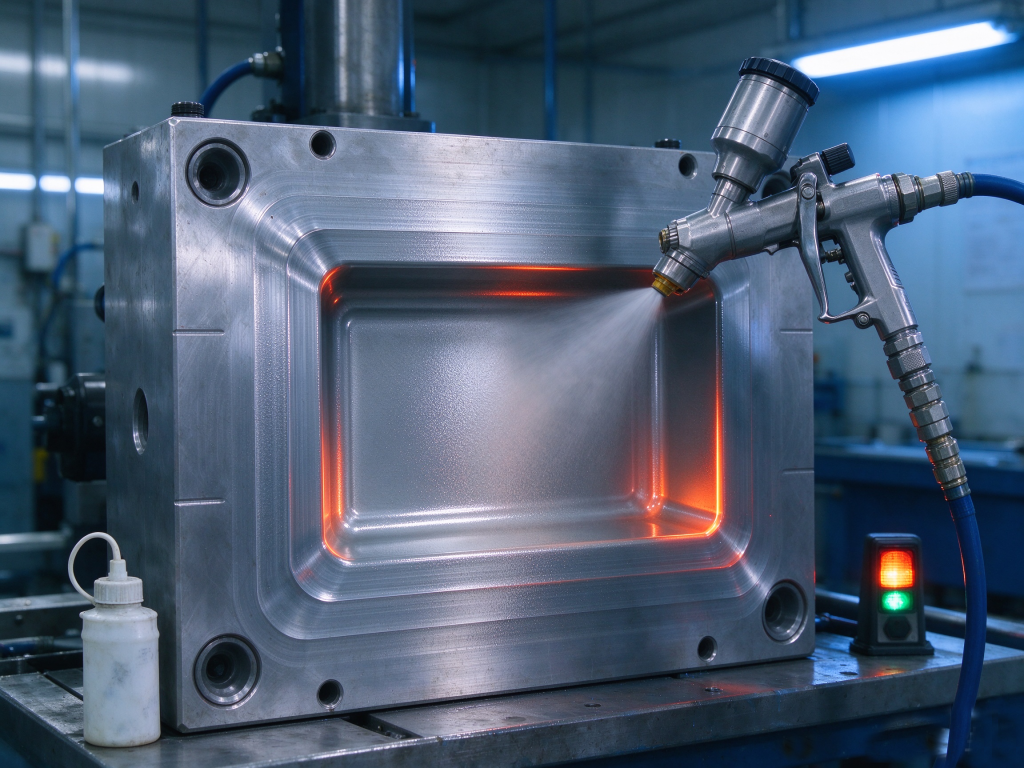
2. Matching Release Agent Spraying with Casting Rhythm (for rotary casting lines & batch casting machines)
Recommended standard production sequence: Demold finished part → Clean mold → Reheat mold to target temperature → Spray release agent → Fixed flash-off waiting → Casting machine discharge → Close mold for curing → Demold at set time
For batch intermittent casting: Suitable for small-batch multi-specification production. Spray once per mold, fix flash-off time, and start casting only after flash-off completes. Never rush pouring. For automatic rotary casting lines: Spraying station, waiting station, casting station and curing station are separated. The residence time at the spraying station equals flash-off time. The rotary index cycle must match this flash-off window. If the turntable moves too fast and cuts the waiting time short, mass mold sticking will occur. Many rotary line demolding issues are caused by shortened flash-off time for faster cycle.
Casting rhythm also needs to match mold temperature: At higher mold temperature, release agent forms film quickly and fails fast, so shorten flash-off time and avoid long delay before casting. At lower mold temperature, solvent evaporates slowly and longer waiting is required.
3. Tune Casting Machine Parameters to Improve Demolding
Spraying adjustment alone is not enough. Casting rhythm itself affects demolding performance:
3.1 Casting speed: Fast discharge flow washes away the fresh release film on mold walls. For high-viscosity systems, reduce pouring speed for gentle filling.
3.2 Mix ratio & material temperature: Ratio drift and unstable material temperature change curing speed. Fast cure makes material tightly grip the mold; slow cure lets the material soak and damage the release film. Both lead to difficult demolding.
3.3 Curing & demold timing: Do not demold in advance. Insufficient curing leads to sticking and tearing. Do not delay demold too long either, as release agent will degrade under continuous heat.
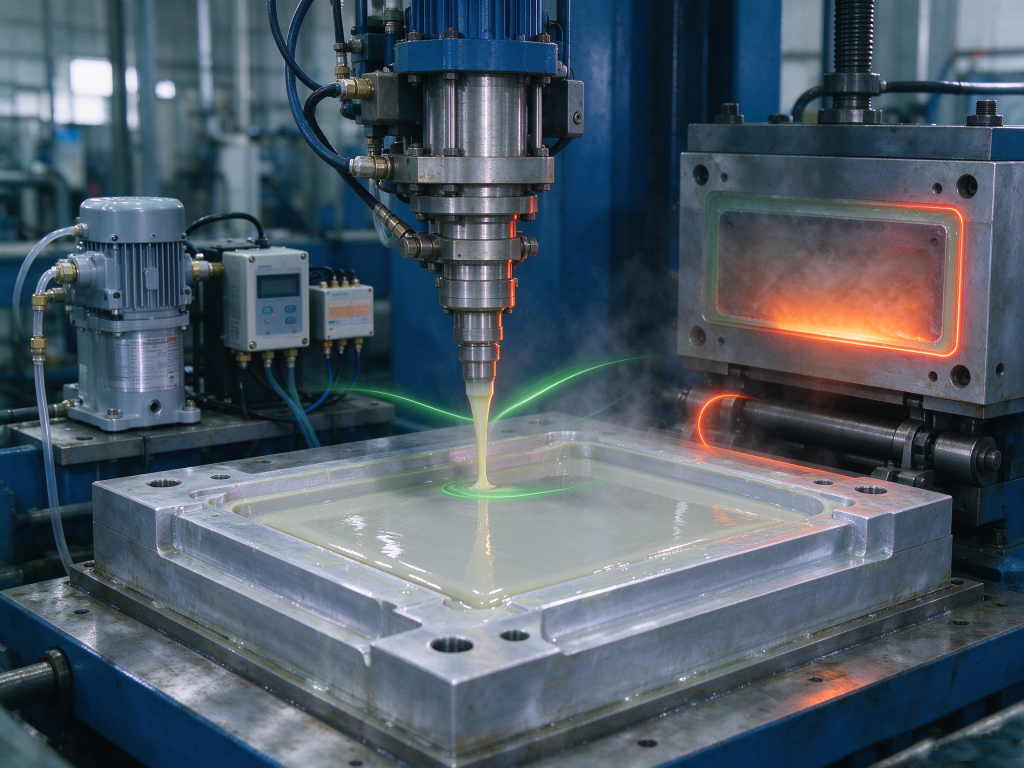
4. Wrong Matches & Troubleshooting Sequence
Mistake: Cast immediately after spraying → Solvent remains, separating film is destroyed
Mistake: Long waiting after spraying on hot mold → Release agent fails prematurely
Mistake: Too fast rotary cycle, insufficient residence time at spraying station → Unstable batch quality
Mistake: Over-spray release agent to compensate poor rhythm → Severe surface defects
Troubleshooting order: Check mold cleanliness → Verify mold temperature → Lock spraying parameters and flash-off time → Adjust casting discharge speed and turntable cycle → Confirm curing and demold timing.
5. Summary
Smooth demolding depends on coordinated process timing instead of release agent alone. Release agent forms the separating layer, while casting rhythm protects this layer from damage before curing. Align spraying, flash-off, casting, curing and demold timing, and link casting machine cycle with spraying station, so you can achieve stable demolding, cut scrap rate and reduce release agent consumption.
 FEILONG PU MACHINE