Key Features: 1. Good heat resistance: NDI-BDO hard segment does not melt at 320 ℃, while MDI and TDI have melting points of 230 ℃ and 210 ℃ respectively with BDO hard segment; 2. High tear strength, good wear resistance, low compression permanent deformation. Despite being a polyester chain, it has high resilience and excellent oil resistance. 3. Within a wide range of temperature changes, the elastic damping value is low, with the lowest damping value at 20-80 ℃. Therefore, under dynamic conditions, the internal heat generation is low, and under high dynamic loads, it is more durable than TDI and MDI systems. For example, the solid wheels of European industrial automatic loading and unloading vehicles are all prepared with NDI elastomers; 4. By changing the ratio of NDI and polyester, products with a wider range of hardness can be prepared; 5. NDI is relatively expensive, with high activity, poor process performance, and difficult manual operation.
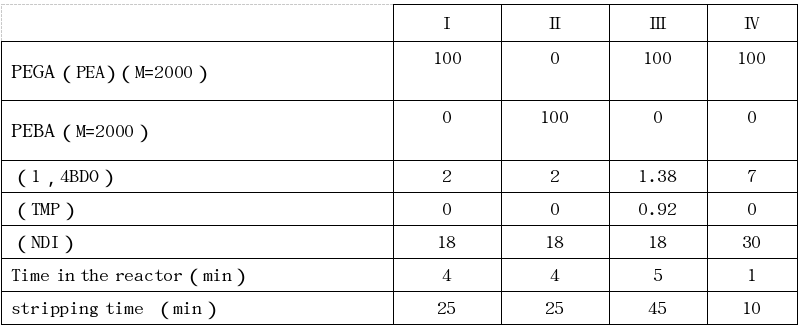
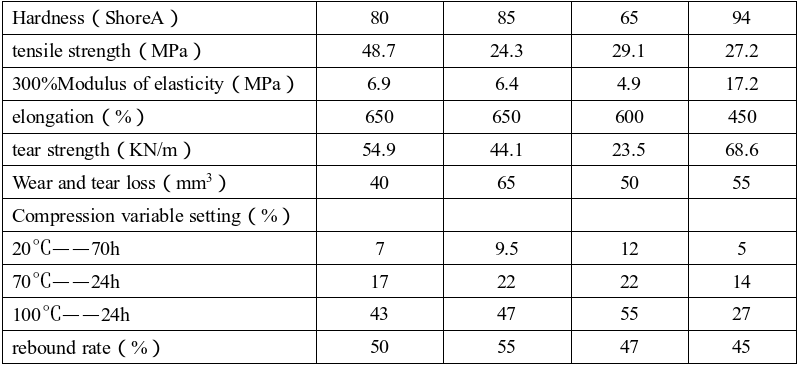
II、 Formulas and performance of several NDI-PES-BDO cast CPUs:
IV、 Process: Generally synthesized using the pre polymerization method.
1. Characteristics: Due to the high reactivity of NCO reaction on naphthalene nuclei, the storage time of end NCO prepolymers is very short, and they must be made into products within 30 to several hours. Therefore, NDI type prepolymers can only be produced on-site and made into products as soon as possible. Their pot life ranges from 30 seconds to 5 minutes, and their hardness ranges from A55 to D70. 2. Prepolymer synthesis: First, dehydrate the polyester polyol under the conditions of 135-140 ℃ and vacuum degree 5-10mmHg to reduce the water content of PES to below 0.05%. The initial reaction temperature of PES when adding NDI can be determined according to the feeding amount. When the amount is large, the initial reaction temperature can be appropriately reduced to enable rapid reaction after adding NDI. The prepolymer is synthesized at a temperature of 127-128 ℃, then reacted with crosslinking agent and vulcanized into the product at 110 ℃.
V、 Equipment:
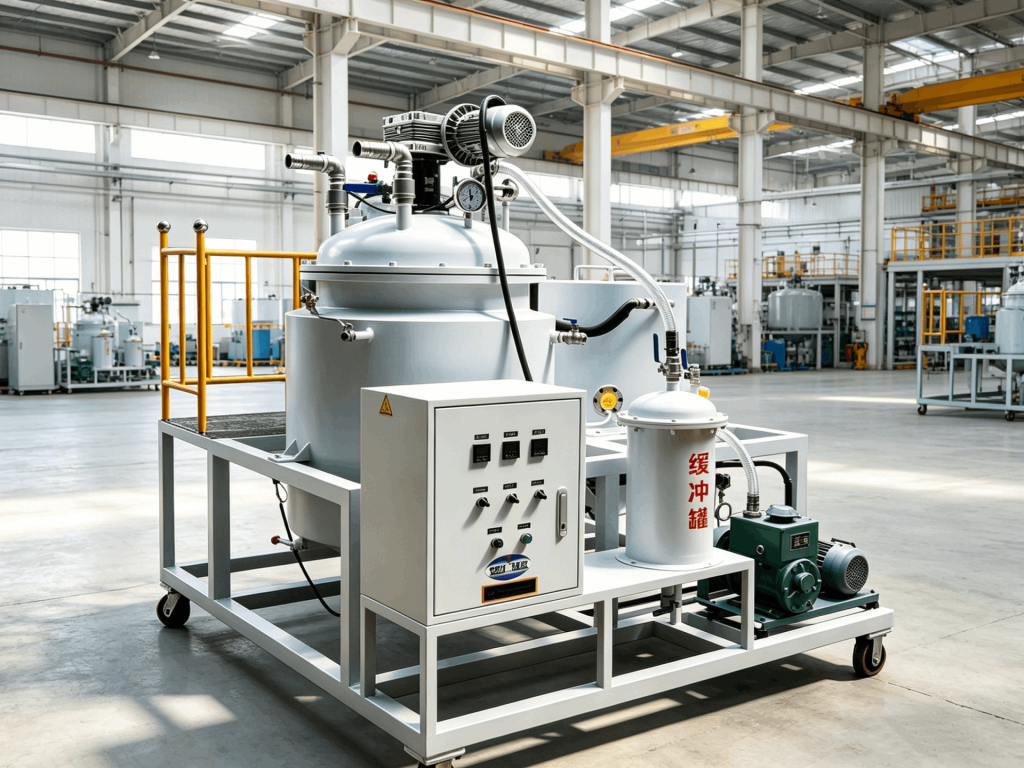
1. When there are many changes in the product or when the formula reacts quickly, Hennecke type double reaction kettle can be used for production. The double reaction kettle consists of two parts: one part is to combine the agitator (60r.p.m.), transmission device (0.55kw), heating device (50~150 ℃, 2 × 4.5kw), kettle cover, vacuum and temperature control system into a rectangular cabinet, and the agitator and kettle cover can be electrically lifted and turned together; The other part of the thin-walled stainless steel flat bottomed round drum (with a capacity of 30-50L) is fed into the heating cylinder, and the kettle cover and stirrer are lowered for stirring reaction and vacuum defoaming. After completion, the prepolymer is taken out together with the feeding drum. The utility model has the advantages that the material barrel is convenient to load and take, and the gel can also be burned and cleaned or the spare material barrel can be replaced.
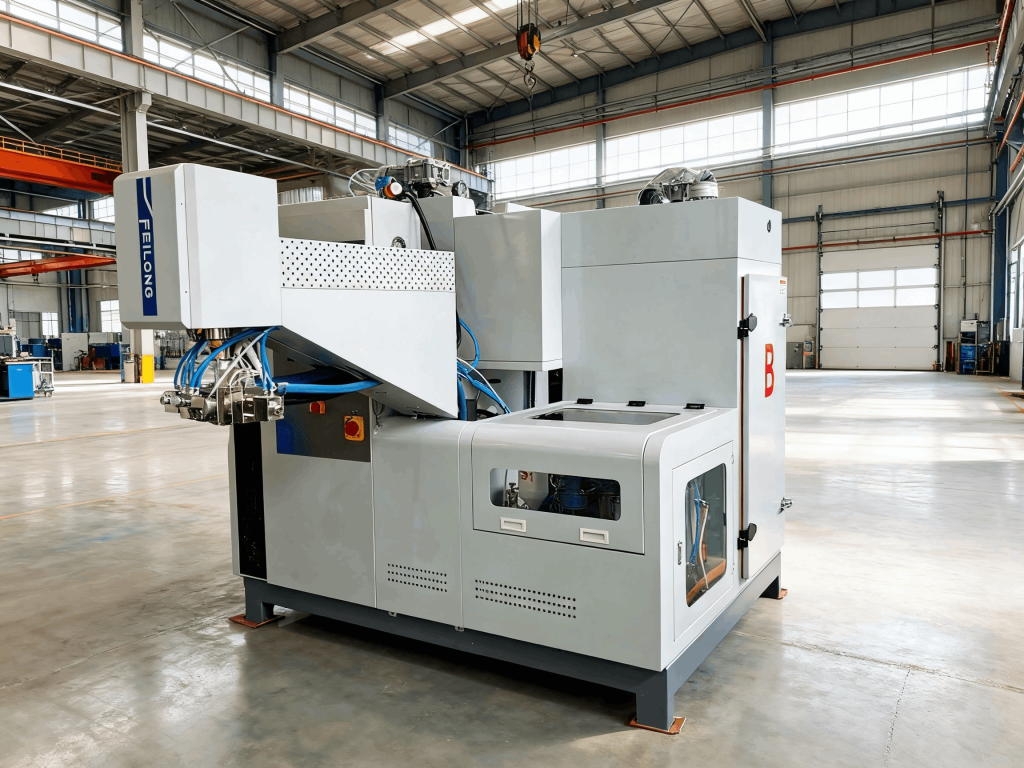
2. Our company’s improved CPU casting machine for producing NDI can be used to synthesize NDI prepolymer in tank A, but the following improvements must be made: (1) Raise the working temperature of material tank A to 150 ℃, improve the heating and temperature control devices, and enhance the temperature control accuracy with an error of less than ± 1 ℃; (2) Increase the working pressure of material tank A, which can withstand pressure of 0.2~0.3MPa. Nitrogen can be added to stabilize the pressure in the tank to ensure smooth suction of the metering pump; (3) The discharge part of tank A has been improved by using a new stainless steel discharge valve, which can ensure that there is no residual material in the tank and that the valve is not clogged. The original design was from the discharge port of the material tank to the shut-off valve. In order to facilitate the heating of the heat transfer oil, this section of the pipe was made longer. This resulted in the synthesis of the polymer in material tank A. However, due to the poor mixing and reaction of the liquid in this section of the pipe, the quality of the synthesized polymer was affected (especially when there was less feeding). (4) Due to the significant difference in the mixing ratio between NDI series A and B materials (A: B=100:1-7), it is necessary to improve the structure of the mixing chamber and stirring head, prolong the residence time of the mixture, and ensure complete and uniform mixing without generating bubbles.
yw.png)

yw.png)
yw.png)
yw.png)

 FEILONG PU MACHINE