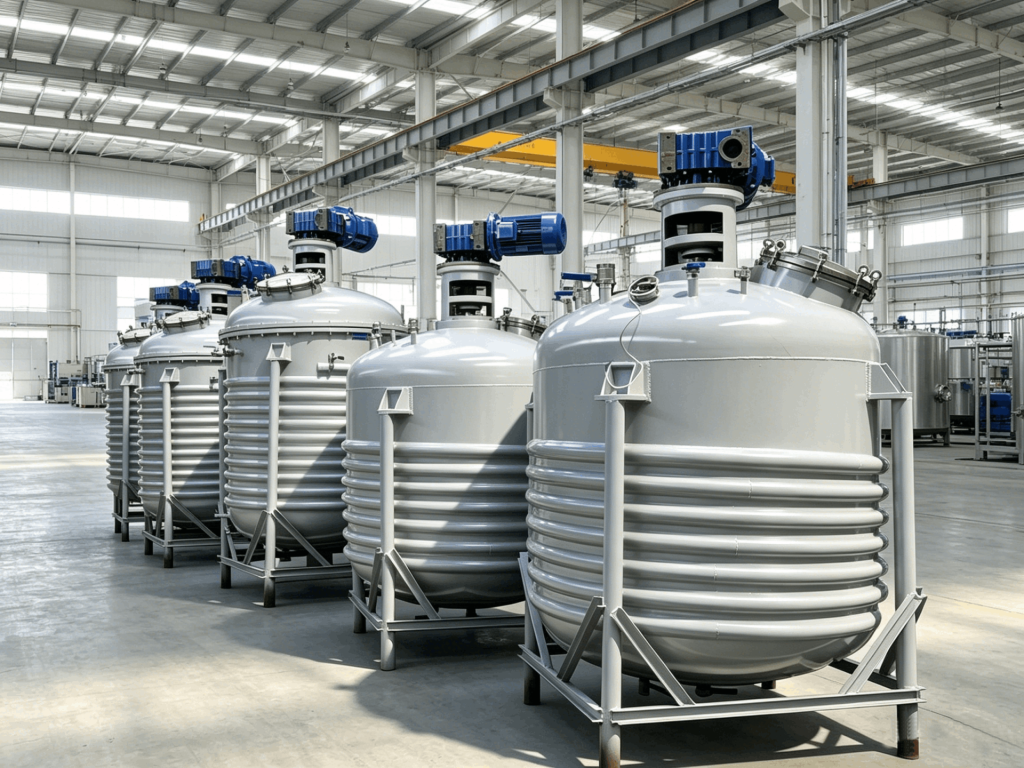
(Image: Feilong Polyurethane Reactor) I、 Currently, two types of reaction vessels have been finalized for production: General structure reaction kettle: It is similar to a general chemical reaction kettle, but has been improved according to the process requirements of polyurethane prepolymer production as follows: (1) According to the process conditions, the general working pressure is normal pressure or vacuum state operation, so the reaction kettle adopts a three-layer structure with a flat lid and stirring design. Three layer structure: stainless steel argon arc welded inner liner; Heating or cooling jacket with spiral baffle (additional spiral baffle can increase the rigidity and strength of the inner liner), and accelerate the flow rate of the heat transfer medium to prevent short circuit and improve heat transfer efficiency; Outsourced polyurethane rigid foam insulation layer (the thickness of the insulation layer is determined to be 20-60mm based on the working temperature inside the kettle or jacket). The use of a flat cover can eliminate the gas storage space formed by the convex cover, prevent the influence of moisture on the raw materials from the upper part, and ensure the concentricity of the mixing shaft by using a flat cover for machine processing. In addition, the equipment has a precision mechanical seal, which can improve its sealing performance and ensure reliable use in vacuum state. (2) Improved the design of the electric heater in the bottom jacket of the kettle, making it more uniform and effective in heating the raw liquid inside the kettle through thermal oil, and greatly reducing the diameter of the jacket and outer shell. (3) Drawing on advanced foreign structures, the discharge bottom valve has been improved to be flexible in opening and closing, and there is basically no material stored in the kettle. (4) Optimized the temperature control method, adopting the method of exchanging jacket cooling and hot oil, so that the original liquid in the kettle can be quickly heated and cooled. Easy to remove inner liner reactor (imitating Henneeke): Its structure and requirements are basically the same as the above, with a flat lid and four layer structure with stirring. The stainless steel inner liner can be easily lifted out with an attached electric crane for cleaning, solving the problem of cleaning the reactor.
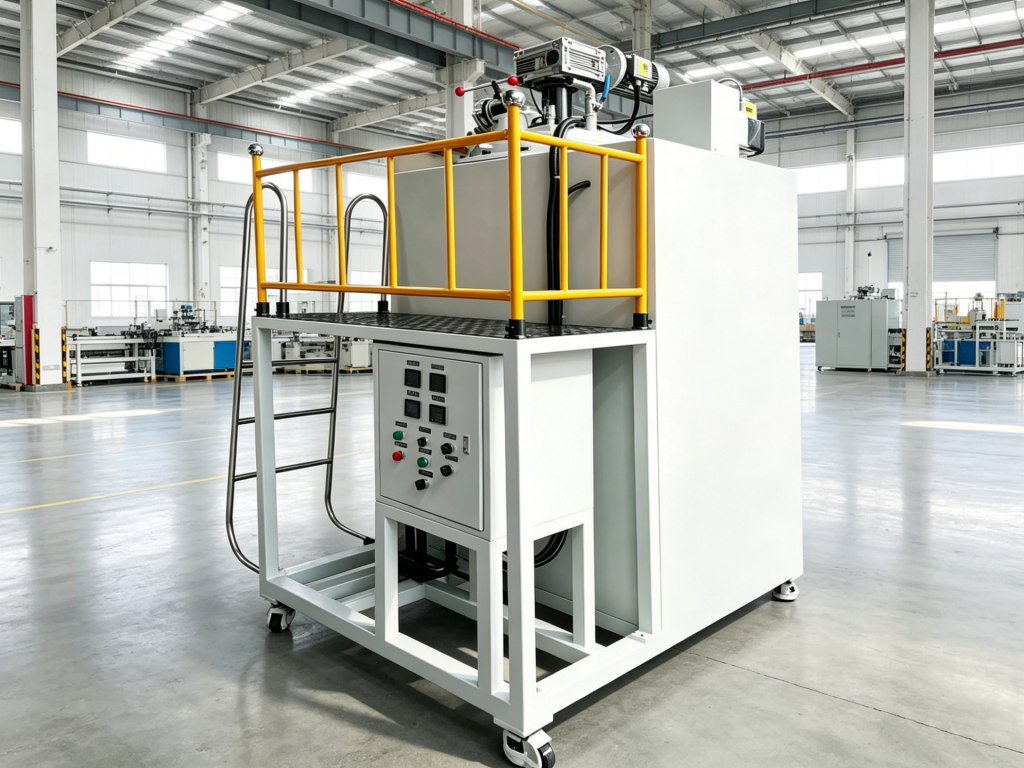
(Image: Feilong Polyurethane Reactor) II、 Temperature control and thermal oil circulation system: to achieve the required temperature of polyols or prepolymers to meet the needs of dehydration and reaction. Heating system: The electric heating tube in the hot oil tank heats the thermal oil to the required temperature, and the circulating oil pump transports the hot oil to the spiral channel of the reaction kettle jacket, heating the original liquid (or reaction liquid) in the kettle. After the thermal oil fills the jacket, it overflows back into the hot oil tank and heats the raw material (or reaction liquid) in the kettle due to the forced circulation of the thermal oil. Cooling system: The cooling water coil in the cold oil tank (if necessary, a refrigeration unit can be added) cools the heat transfer oil to the required temperature. When all the hot oil in the jacket of the reaction kettle is placed in the hot oil tank, the circulating oil pump transports the cold oil to the spiral channel of the jacket of the reaction kettle, cooling the original liquid (or reaction liquid) in the kettle. The cold heat transfer oil overflows back to the cold oil tank after filling the jacket, and cools the raw material (or reaction liquid) in the kettle due to the forced circulation of the cold heat transfer oil. When it is necessary to heat the jacket with thermal oil again, the cold thermal oil inside the jacket must be returned to the cold oil tank first. Temperature control system: The temperature of the raw liquid, hot oil, and cold oil is controlled by an intelligent time proportional digital temperature controller. Heating (electric heating tube and hot oil pump) and cooling (switch of cold oil pump and cooling water and refrigeration machine) can achieve the required temperature (error < ± 2 ℃)
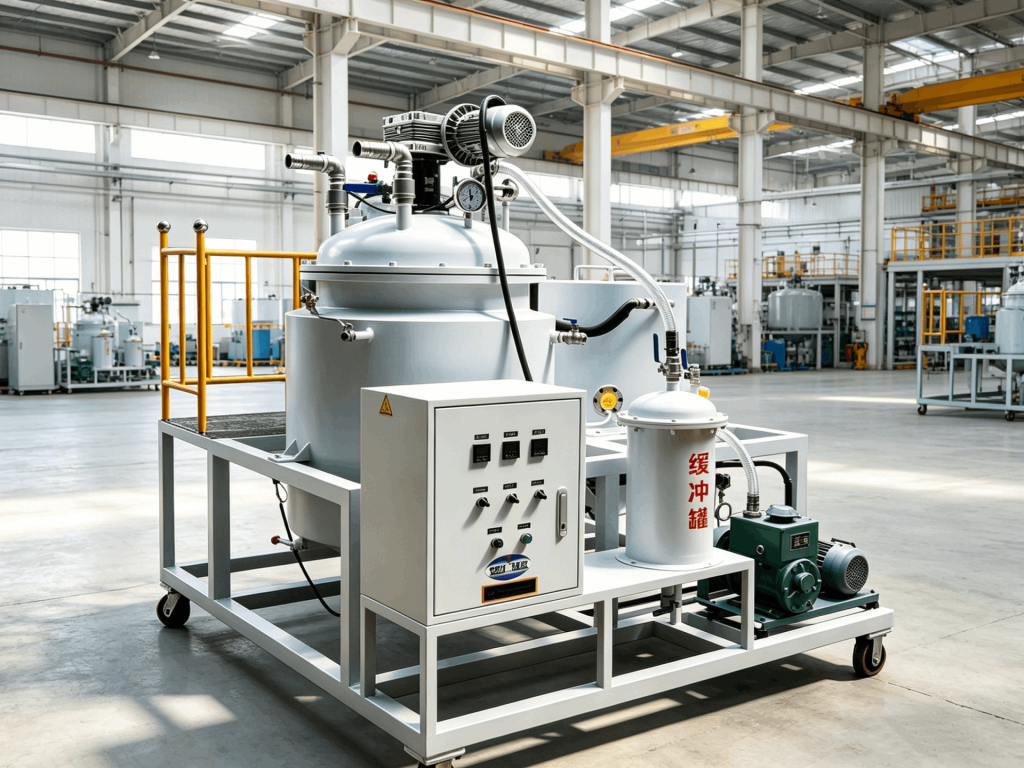
(Image: Feilong Polyurethane Reactor) III、 Vacuum system: The reaction vessel passes through a vacuum buffer tank (commonly multi-layer baffle type) to a vacuum pump (commonly rotary vane type), and the vacuum pressure gauge in the reaction vessel can display its vacuum degree or the pressure of nitrogen filling. Require the pipeline to be as short as possible, with few joints and valves to prevent air leakage. For shock absorption, a hose can be used in the middle to connect. IV、 The specific structure and requirements can be made according to user requirements (please refer to relevant samples and materials). Please provide relevant usage conditions for ordering, such as working pressure, vacuum degree, working temperature, mixing requirements, etc. (usually using double-layer slurry mixing with speeds of 60, 80, or 100 rpm), and variable speed mixing can also be used if necessary. Takeover requirements: According to the purpose, diameter, or connection method of the pipe (such as flange or pipe thread connection), the upper part or flat cover of the kettle should be equipped with sight glasses and light mirrors, quick opening feeding ports and feeding pipes, vacuum pumping, nitrogen addition, and venting joints. Install heat transfer oil inlet and outlet pipes and non condensable gas outlet on the jacket.
 FEILONG PU MACHINE