Search the whole station
Wenzhou Feilong Polyurethane Equipment Engineering Co., Ltd.
Chinese website: http://www.pumcn.com/
English website: https://www.flpumachine.com/
The metering pump is the core heart of a polyurethane casting machine in elastomer production. Many manufacturers encounter this trouble: the ratio setting on the control screen remains unchanged, yet finished parts show fluctuating hardness, incomplete curing or brittle cracks. After inspection, the root cause is pump leakage or internal slip, which leads to ratio drift.
Many technicians only repair the pump when heavy leakage or massive defective products appear, which already causes large material waste and scrap loss. Leakage and ratio drift rarely happen suddenly. They are usually caused by aging seals, impurity abrasion, lack of regular calibration and air entrapment in pipelines. Below we analyze the root causes, tiered maintenance schedule, calibration methods and common pitfalls.
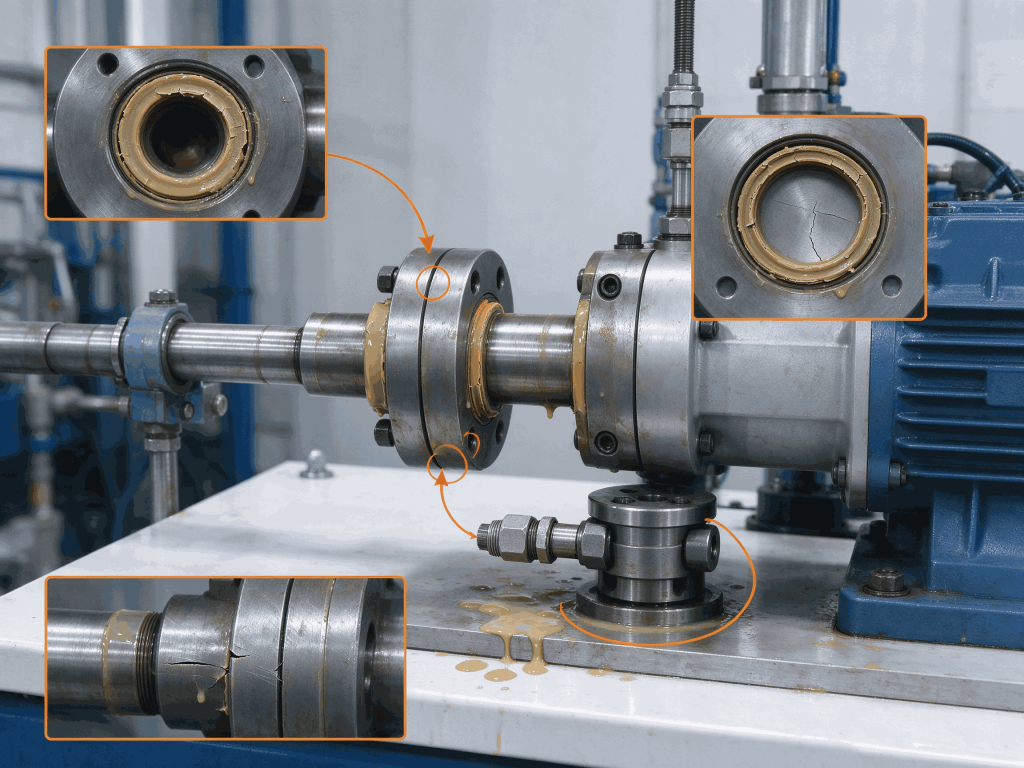
1. Distinguish: Causes of Leakage and Ratio Drift
1.1External leakage
Mostly caused by worn shaft seals, O-rings and gaskets, or loose connections and scratched sealing surfaces from filled fillers. Signs include seepage or dripping at pump shaft and flanges. Leakage reduces the actual output of one component and breaks the mixing ratio immediately.
1.2Ratio drift (internal slip)
No obvious external leakage can be seen. The internal clearance of gears and side plates increases due to wear, and material slips back under high pressure. Air entering suction lines, blocked filters or unstable pipeline resistance also trigger inconsistent flow. If pump A and pump B wear at different speeds, the ratio drifts gradually. This hidden fault cannot be detected merely from the HMI setting.
Important note: Raw materials filled with calcium carbonate, aluminum hydroxide cause much faster pump wear than pure polyol. The maintenance cycle shall be shortened accordingly.
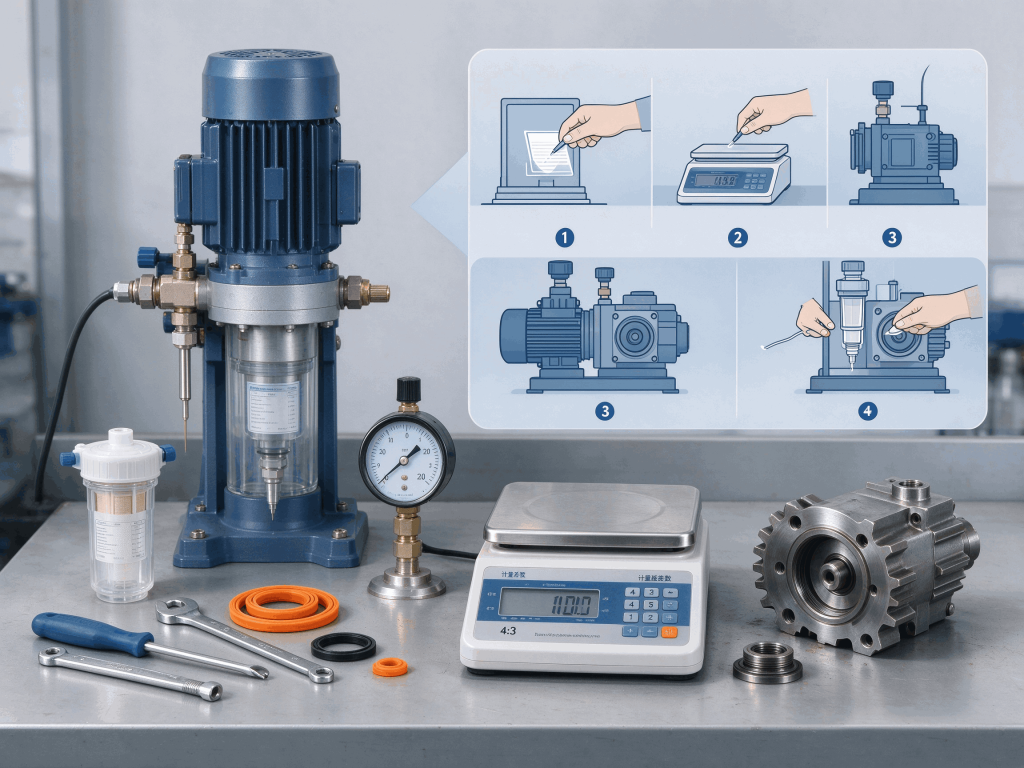
2. Standard Maintenance Schedule by Shift / Day / Week / Month
2.1 Pre-shift check before every production run
(1)Visually inspect shaft seals, flanges and fittings for seepage or dripping;
(2)Check suction filter pressure and air bubbles in feeding lines to eliminate air ingress;
(3)Perform ratio calibration by weighing: collect A and B material separately, weigh output under fixed pouring time and compare with target ratio;
(4)Verify pump heating and PT100 temperature sensors to keep stable material viscosity and reduce slip.
2.2 Daily maintenance
(1)Wipe residual material on pump surface with compatible solvent; avoid soaking seals in strong corrosive solvent;
(2)Check coupling for looseness and abnormal noise, monitor stable motor current;
(3)Check back-pressure pipeline and pressure regulators for stable pressure; investigate abnormal fluctuation immediately;
(4)Record ratio deviation, pressure, temperature and leakage status for equipment log.
2.3 Weekly maintenance
(1)Disassemble and clean suction filters to remove filler residues and cured impurities;
(2)Run multiple weighing tests to confirm ratio stability;
(3)Check seal elasticity and observe seepage trend at shaft seal;
(4)Tighten loose clamps and joints to prevent air entering under negative pressure.
2.4 Monthly maintenance
(1)Stop the machine, disassemble and inspect internal clearance of gears and side plates to evaluate wear;
(2)Replace aged shaft seals, O-rings and gaskets. Tungsten carbide pumps and special seals are recommended for filled raw materials;
(3)Inspect lubrication of reducer and bearings;
(4)Compare ratio history data to track wear trend and prepare spare parts in advance to avoid unexpected shutdown.
3. Reliable Calibration Method for Ratio Drift
Offline weighing test is preferred over sensor readings:
3.1 Disconnect the mixing head, collect A and B streams separately into containers on high-precision scales;
3.2 Run pouring for fixed duration and weigh each component;
3.3 Repeat 5 to 10 cycles and calculate average ratio;
3.4 If deviation exceeds tolerance, check blockage, air ingress and seals first, then calibrate flow after mechanical issues are solved.
⚠️ Do not simply modify the set ratio on the screen to “compensate”, which hides hardware faults such as worn pump and failed seals.
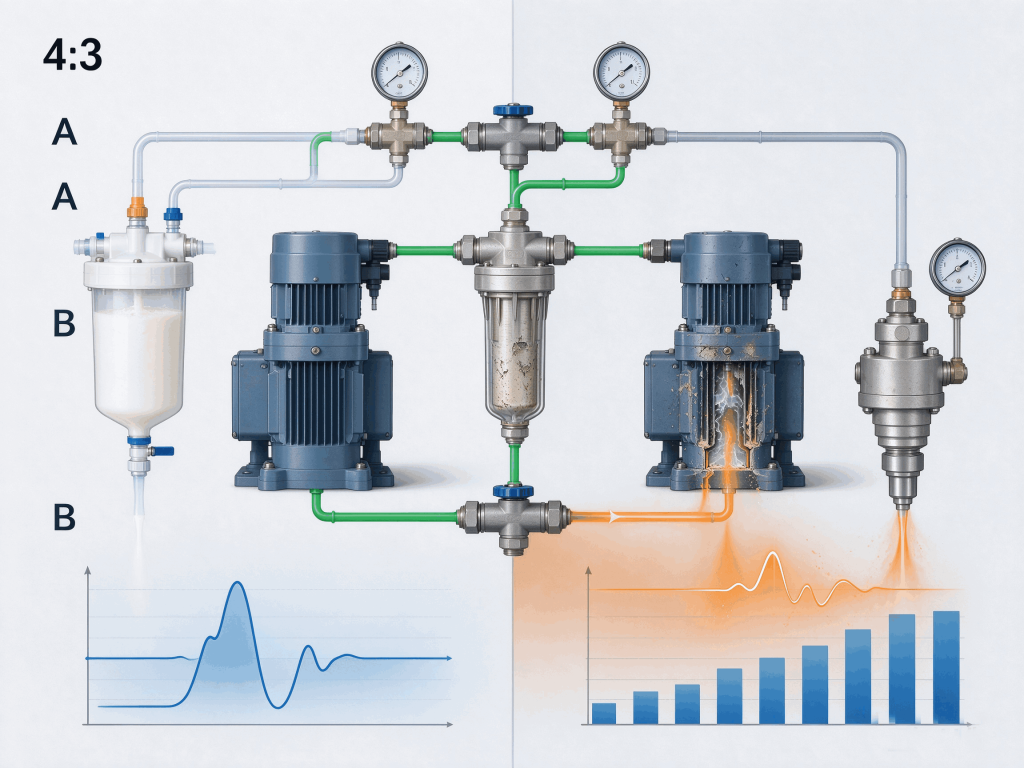
4. Common Maintenance Mistakes to Avoid
❌ Continue running with slight seepage: once the seal starts leaking, wear accelerates rapidly and leads to pump failure quickly;
❌ Rely only on HMI settings without regular weighing calibration;
❌ Soak seals in strong corrosive solvent during cleaning, which causes swelling and aging;
❌ Apply the same maintenance cycle for filled raw materials as pure polyol; filled materials accelerate wear;
❌ Ignore air entrapment in pipelines, which causes unstable flow and irregular ratio drift.
5. Summary
External leakage is visible, while ratio drift is hidden inside the pump. Both upset the A/B mixing ratio and create batch rejects. Staged maintenance is essential: ratio weighing per shift, daily inspection and cleaning, weekly filter cleaning, monthly seal replacement and wear inspection. Combined with regular calibration, you can detect hidden risks such as aging seals, internal wear and air ingress early and stabilize the mixing ratio.
Wenzhou Feilong polyurethane casting machines adopt high-precision wear-resistant metering pumps optimized for filled raw materials. They deliver stable flow and come with standardized maintenance guidance, reducing pump leakage and ratio drift to support long-term reliable production.
 FEILONG PU MACHINE