Search the whole station
Wenzhou Feilong Polyurethane Equipment Engineering Co., Ltd.
Chinese website: http://www.pumcn.com/
English website: https://www.flpumachine.com/
In mining, material handling, lifting and construction machinery, MC nylon is widely used to replace copper, steel and polyurethane for wear-resistant components. Many buyers and process engineers hold a misunderstanding that all MC nylon performs similarly. In actual production, with the same formula and casting method, molecular weight becomes the key factor that separates service life. Most standard MC nylon on the market features molecular weight between 30,000 and 50,000. High-molecular-weight MC nylon reaching 80,000 has longer molecular chains and tighter chain entanglement, which brings remarkable improvements in bulk properties.
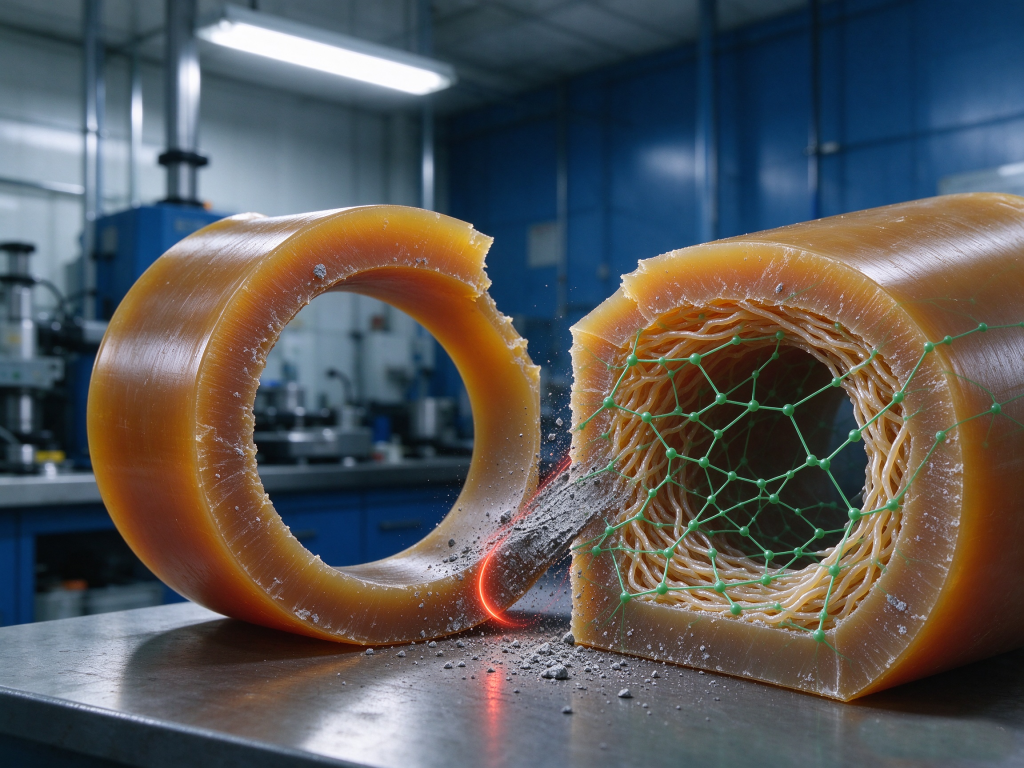
Many customers report that standard MC nylon bushings, rollers and guide wheels gradually develop surface fuzzing, powder shedding and permanent plastic deformation under continuous load. Under cyclic heavy load, cracking and fatigue failure often occur. In most cases, these failures are not caused by impure raw materials or casting voids, but the inherent limitation of shorter molecular chains. Intermolecular force is weaker. Under continuous friction, compression and repeated impact, molecular chains tend to slip and peel off, accelerating wear and creep.
When molecular weight rises to 80,000, five major advantages stand out.
1.Greatly improved wear service life.
Entangled long chains build a dense and continuous wear-resistant skeleton. Micro peeling during friction is suppressed, leading to lower wear rate. For dry friction with sand, ore dust and particles, its wear life can reach 1.5 to 2.5 times that of ordinary MC nylon. It works well for sieve plates, sliding blocks, wear liners and mining guide wheels.
2.Significantly enhanced creep resistance.
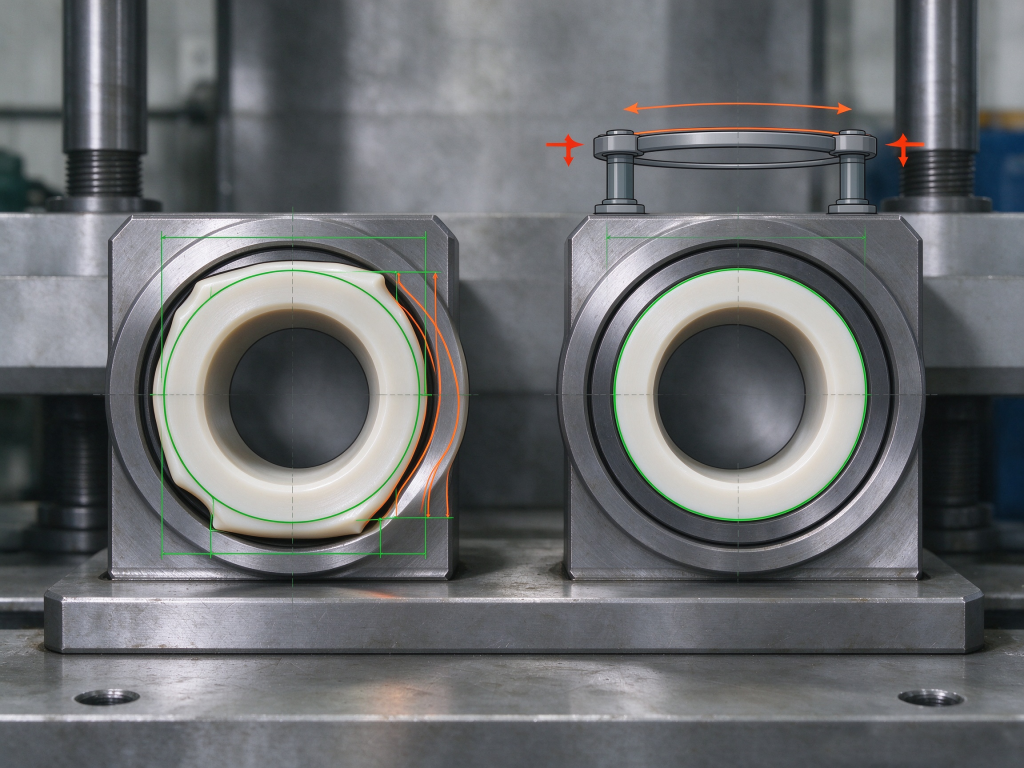
As a thermoplastic material, nylon creeps slowly under constant load. Low molecular weight nylon suffers large dimensional drift after long-term compression, which creates excessive clearance, vibration and jamming. 80,000 MW MC nylon restricts creep and maintains stable dimensions under sustained load, ideal for bearing sleeves, pulleys and hydraulic support rings.
3.Better impact and fatigue resistance.
Long molecular chains disperse impact stress and resist brittle fracture. Crack propagation under cyclic load slows down. Standard nylon tends to crack starting from stress concentration points under frequent shocks, while this high-grade material survives harsher repeated impact for forklift attachments, transfer equipment and vibrating screen parts.
4.Stable friction and self-lubricating performance.
It does not have an extremely low friction coefficient, but the coefficient stays steady instead of spiking sharply with rising temperature. Standard nylon softens easily when heated by high-speed friction, which raises resistance and accelerates abrasion. The 80,000 MW grade maintains its performance much better with temperature increase.
5.Improved hydrolysis and medium resistance.
In environments with water, emulsion or weak acid and alkali, long-chain nylon resists chain scission and softening slower. It is not suitable for strong corrosive media, but tolerates a wider range of working conditions compared with regular MC nylon.
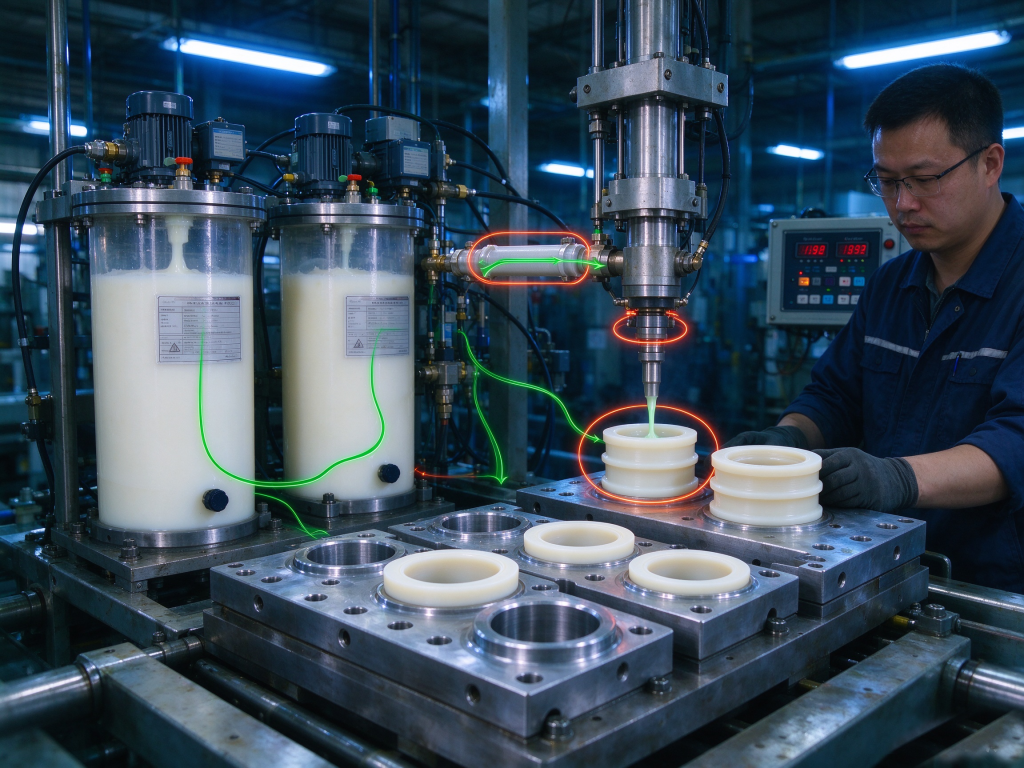
We also need to state its limits objectively. Higher molecular weight brings higher melt viscosity, which sets stricter requirements for casting equipment, temperature control and curing schedule. Poor mixing, insufficient degassing or unstable temperature control will trap air easily and create internal defects. Stable production of this material relies on precise metering, heating, mixing and curing control from the casting system; simple low-end machines cannot consistently produce qualified parts. Besides, higher molecular weight does not equal higher hardness. Its strengths lie in toughness, wear resistance and anti-creep property, not extreme hardness. If your priority is high hardness instead of long-term wear and deformation control, standard grades may be sufficient.
A simple selection guide: for intermittent light-load applications with easy replacement and tight budget, conventional MC nylon meets demands. For continuous heavy-duty operation, high replacement cost, frequent impact and long-term load where dimensional deviation must be limited, choose MC nylon with molecular weight of 80,000.
In conclusion, the advantage of MC nylon comes from its molecular chain structure. The 80,000 molecular weight grade is not empty marketing. The performance gain originates from chain entanglement, delivering longer service cycles, smaller permanent deformation and stable friction behavior. Combined with mature casting technology, this material can reduce maintenance expense and unplanned downtime for your equipment.
 FEILONG PU MACHINE