Search the whole station
Wenzhou Feilong Polyurethane Equipment Engineering Co., Ltd.
Chinese website: http://www.pumcn.com/
English website: https://www.flpumachine.com/
Many manufacturers producing PU wheels, rollers, seals and carpet backing add inorganic fillers like calcium carbonate, aluminum hydroxide and talc into polyol to cut costs and adjust product properties. These fillers have much higher density than liquid polyol, so they settle easily and accumulate at the bottom of tanks. This causes a series of production troubles: filler caking at tank bottom, inconsistent filler concentration, unstable metering flow and fluctuating hardness and color of finished parts.
Many factories only rely on manual stirring before starting production. Sedimentation comes back quickly after running, resulting in repeated defective products. Filler settlement is a combined problem, which requires coordinated control of equipment structure, circulation pipeline, formula and operation.
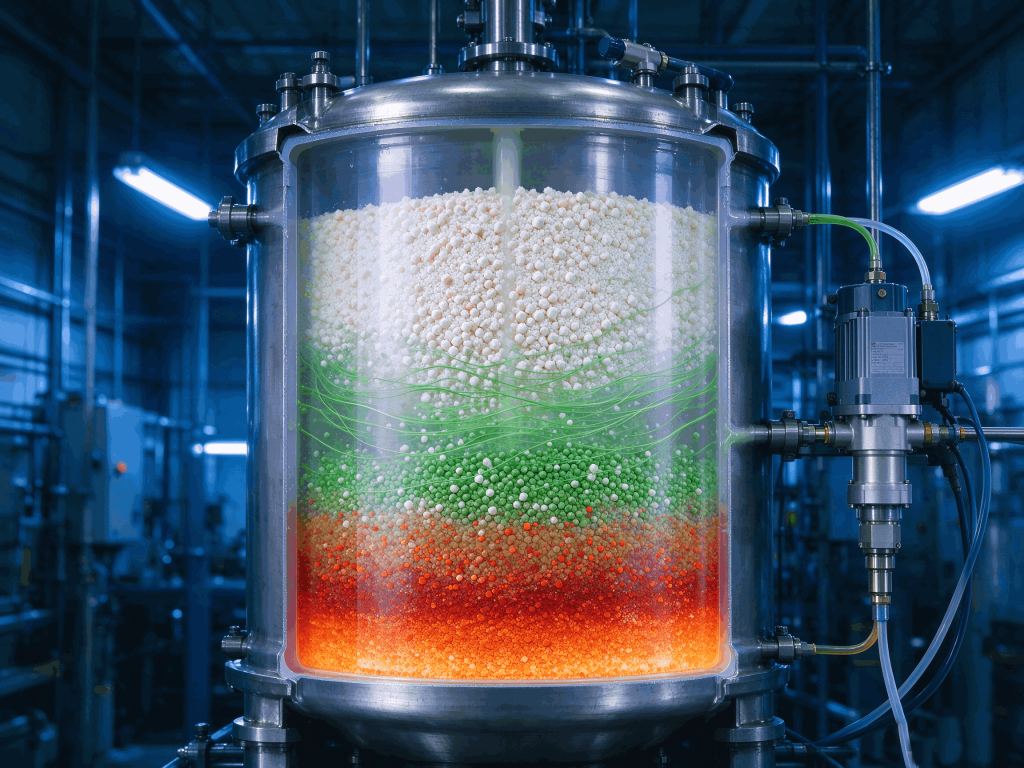
1. Defects Caused by Filler Sedimentation and Uneven Feeding
1.1 Unstable hardness within one batch; harder zones with high filler content and softer zones with low filler content.
1.2 Color difference, streaks and mottling on part surface; uneven filler distribution inside cross-section.
1.3 Filler deposits block filters and wear metering pumps, triggering internal slip and ratio drift.
1.4 Hard sediment lumps enter the mixing head and cause blockage and unexpected shutdown.
1.5 Long-term stratification leads to inconsistent raw material composition between shifts and batches.
Note: At low temperature, polyol viscosity rises and suspension capacity drops, sedimentation accelerates significantly in winter.
2. Equipment Modifications (Core & Effective Solutions)
2.1 Low-speed frame agitator for material tank
High stirring speed traps air bubbles. Continuous low-speed stirring or intermittent timed stirring keeps solids suspended. The impeller should be close to the tank bottom to eliminate dead zones.
2.2 External circulation loop
Recirculation pipeline keeps material flowing between tank and lines continuously, which is the standard configuration for filled systems. Circulation flow rate shall match tank volume.
2.3 Wear-resistant metering pump and filter upgrade
Hard filler particles wear ordinary gear pumps quickly, increasing internal clearance and slip. Tungsten carbide pumps are preferred for filled raw materials. Large-area easy-to-clean filters prevent lumps from entering the pump.
2.4 Optimized tank design
Conical tank bottom reduces sediment dead corners. Double-jacket heating maintains stable viscosity for better suspension.
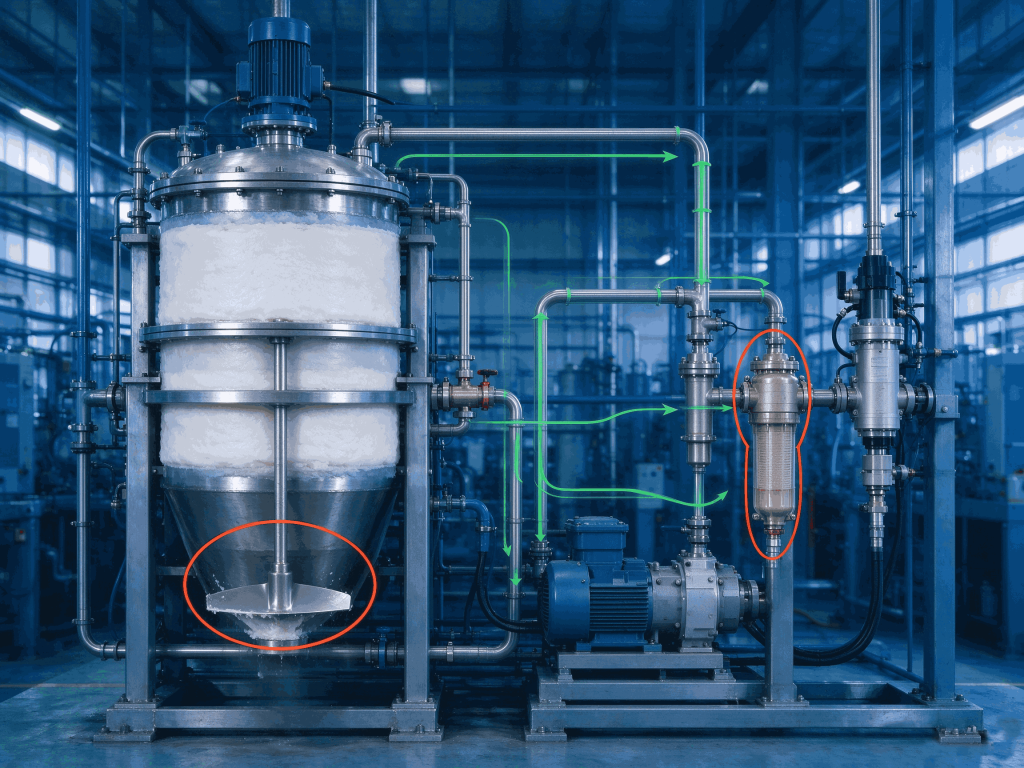
3. Pipeline and Operation Control
3.1Avoid long static standby. Keep stirring and low-flow circulation during shutdown. Before restarting after long standby, run full circulation and test filler concentration before casting.
3.2 Control pipeline flow velocity. Too slow causes settling; too fast accelerates abrasion.
3.3 Run gravimetric ratio calibration every shift, track hardness change to detect concentration drift early.
3.4 Clean filters regularly to avoid suction shortage and flow fluctuation.
4. Formula Optimization for Auxiliary Improvement
4.1 Use surface-modified fillers for better compatibility with polyol and slower settling.
4.2 Mix fine and coarse filler grades to improve suspension stability.
4.3 Add anti-settling additives to build weak thixotropic structure: suspended at rest and pumpable under flow.
4.4 Adjust base polyol viscosity within process window. Low viscosity weakens suspension; excessive viscosity increases pumping load.
⚠️ Reminder: Anti-settling additives alone cannot fully stop sedimentation. Agitation and circulation are the foundation for stable production.
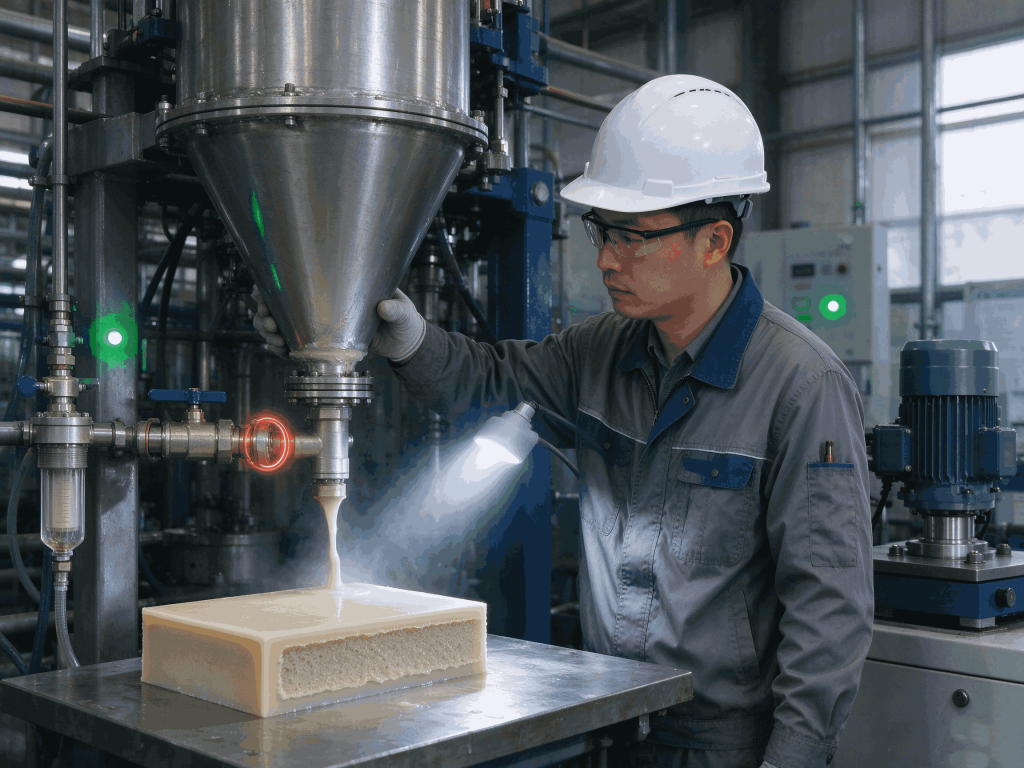
5. Recommended On-site Troubleshooting Sequence
5.1 Check tank bottom dead zone and agitator coverage.
5.2 Verify continuous circulation, check whether return valve is closed.
5.3 Calibrate pump flow and check internal wear and slip.
5.4 Inspect filter blockage.
5.5 Evaluate formula, filler grade and material temperature finally.
6. Summary
Sedimentation and uneven feeding of filled systems come from density difference between solid powder and liquid polyol. Manual stirring alone cannot solve the root problem. The reliable solution combines low-speed tank stirring, continuous recirculation, wear-resistant metering system, standardized standby circulation and formula tuning.
Wenzhou Feilong polyurethane casting machines support customized stirring, circulation and wear-resistant feeding packages for high-filler systems, compatible with calcium carbonate, aluminum hydroxide filled polyol. They reduce sedimentation and feeding fluctuation for stable mass production of PU wheels, rollers and seals.
 FEILONG PU MACHINE