Search the whole station
Wenzhou Feilong Polyurethane Equipment Engineering Co., Ltd.
Chinese website: http://www.pumcn.com/
English website: https://www.flpumachine.com/
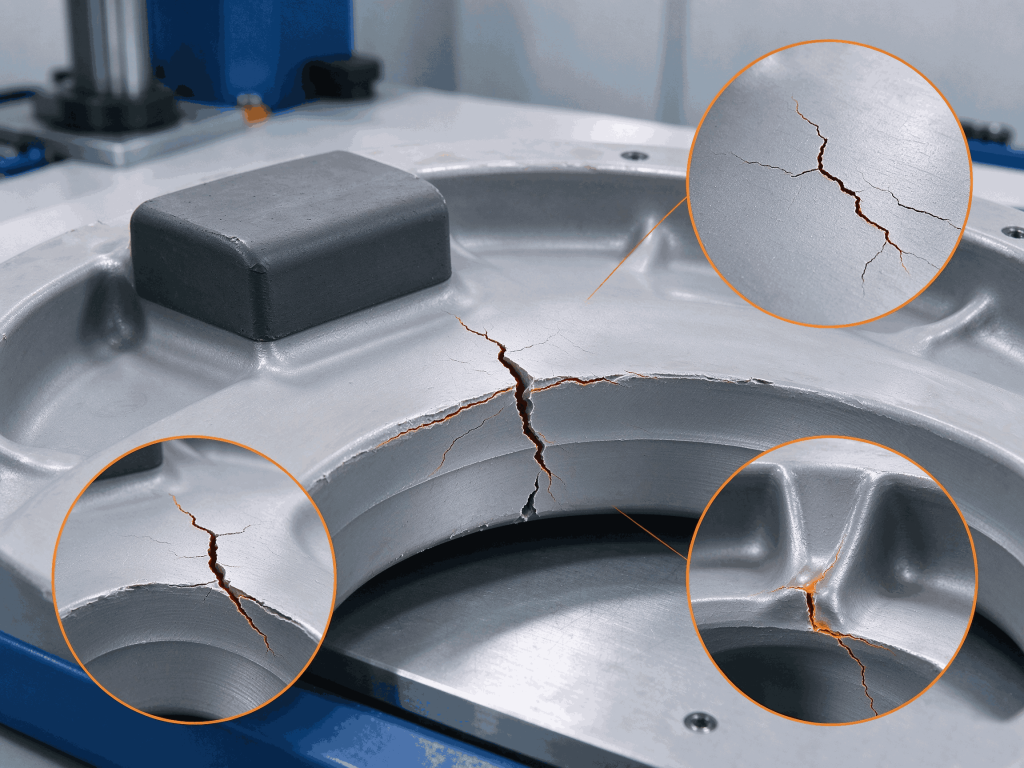
Cracking is a common and troublesome defect for cast polyurethane elastomers. Some parts crack right after demolding, some crack gradually after storage, and others break under load or low temperature. On site, technicians usually suspect two causes first: incorrect mixing ratio of raw materials, or insufficient curing time.
However, in actual production, cracking can stem from many other factors. Simply adjusting the ratio or extending curing time often fails to solve the problem, and may introduce new defects such as changed hardness, poor abrasion resistance or reduced rebound. We will first help you distinguish cracks caused by wrong ratio and insufficient curing, then list other easily ignored causes and provide a complete troubleshooting guide.
1. How to Tell Apart: Ratio Problem vs Insufficient Curing Time
1.1 Cracking Caused by Incorrect Mixing Ratio
Ratio deviation means the isocyanate index deviates from the designed range.
Excess isocyanate (high NCO): The part becomes hard and brittle with high internal stress. Brittle cracks appear shortly after demolding, with neat fracture surfaces and low toughness. It breaks easily under bending and keeps turning brittle during storage.
Insufficient isocyanate (low NCO): Crosslink density is inadequate. The part is soft with low strength and tends to tear plastically. The fracture edge is blunt, abrasion performance is poor, and the material tears slowly under compression rather than brittle fracture.
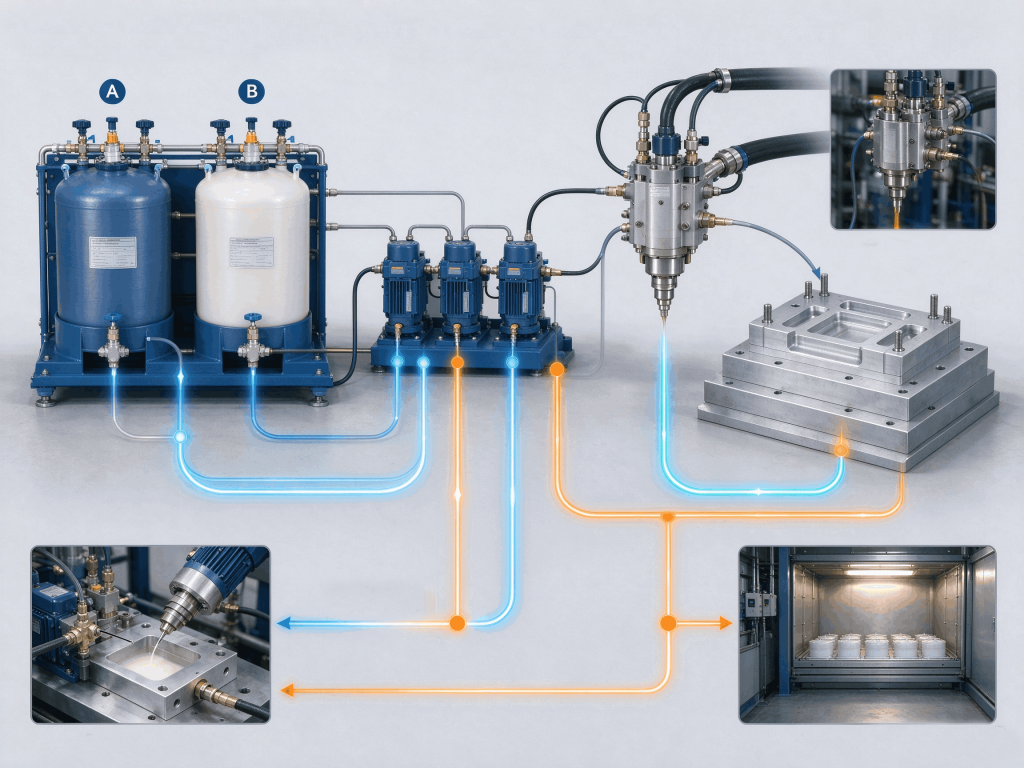
Typical feature of ratio failure: Most parts in the same batch crack, and the hardness deviates greatly from specification. After rechecking metering pump flow, you will find the A/B feed ratio out of the process window.
Important note: Worn metering pumps, cross-contamination in mixing head or blocked pipelines can also lead to actual ratio drift, even if the setting value on the control panel is correct.
1.2 Cracking Caused by Insufficient Curing Time
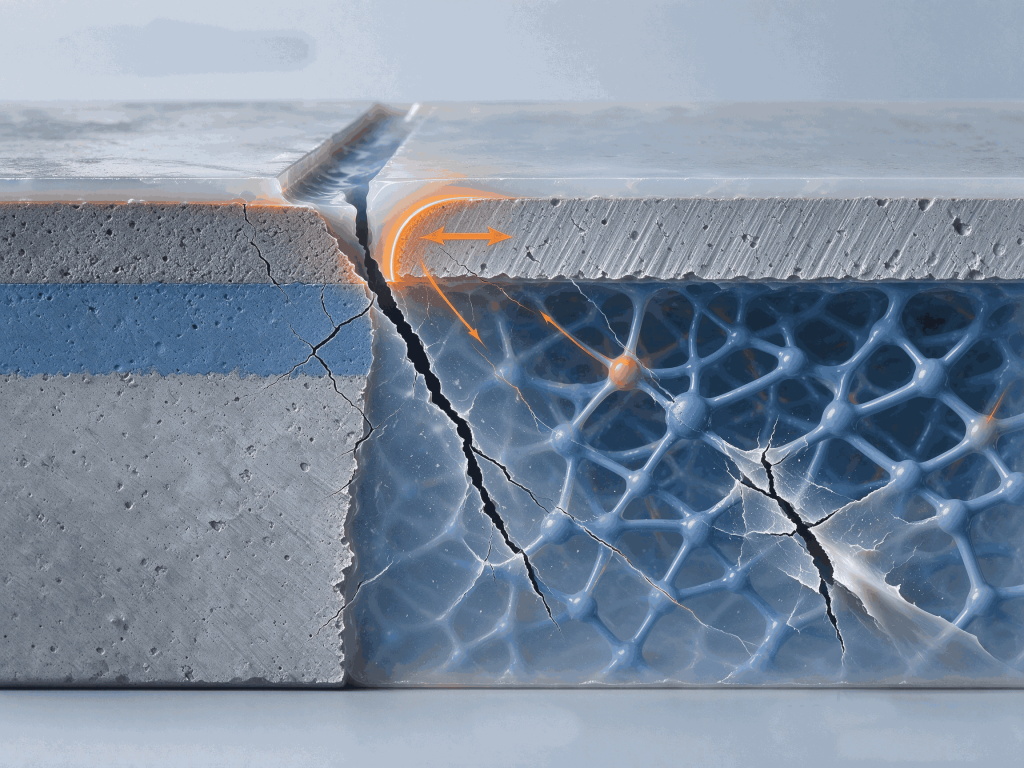
Curing allows polyurethane molecular chains to complete crosslinking reaction. Without enough curing, the internal strength of the product cannot reach the target and internal stress cannot be released.
Typical features: The workpiece looks intact right after demolding, and initial hardness is close to standard. But cracks develop within days under impact, bending, low temperature or assembly squeeze. Cracks mostly start at stress concentration areas such as sharp transitions, fillets and gates.
The biggest difference from ratio defects: Hardness of the part rises gradually, and the cracking rate drops obviously after full standard curing. Curing temperature matters as much as time. Curing at low temperature leads to slow crosslinking even for long duration. Over-high curing temperature cures the material too fast and locks internal stress, which also results in cracking.
2. Other Common Causes of Cracking besides Ratio and Curing Time
Many manufacturers keep adjusting ratio and extending curing time without improvement, because the real reasons are listed below:
2.1 Mold and demolding issues
Insufficient draft angle, sharp corners and too small fillets create microcracks during forced ejection. Those microcracks expand into large fractures under load. Excessive or uneven release agent also damages surface crosslinking and makes the surface brittle.
2.2 Uneven wall thickness and structural design
Thick sections and thin sections crosslink and cool at different speeds, building up large internal stress inside the part. This is the top cracking reason for wheels, bushings and shock pads.
2.3 Fluctuation of raw material and mold temperature
Unstable material temperature changes reaction speed, leading to uneven crosslinking and weak stress points inside the product.
2.4 Poor mixing quality
Improper mixing head speed causes non-uniform mixing. Local ratio deviation creates brittle zones and hidden microcracks.
2.5 Improper cooling after casting
Rapid air cooling or water cooling right after demolding creates huge temperature difference between surface and core, resulting in thermal stress cracking. The correct practice is slow static curing under constant temperature after demolding.
3. Step-by-step On-site Troubleshooting Sequence
3.1 Sample test: Cure part of the batch under standard conditions and the rest with extended curing. If cracking rate drops significantly, optimize curing temperature and duration first. If no obvious improvement, exclude insufficient curing and focus on ratio check.
3.2 Calibrate equipment ratio: Verify metering pump flow, check pressure, recirculation and seals to eliminate cross-flow and blockage, ensure actual output ratio matches the setting.
3.3 Test hardness, tear strength and compare with theoretical values of the formula to judge whether the NCO index is suitable.
3.4 Check mold structure, fillets, draft angle and demolding process, confirm whether cracks start at stress concentration points.
3.5 Stabilize raw material temperature and mold temperature; avoid rapid cooling after casting.
4. Key Tuning Reminders
4.1 Do not blindly increase NCO content for higher strength: Too high index increases brittleness and cracking risk;
4.2 Do not extend curing time endlessly: It reduces production efficiency. If the root cause is ratio or structural stress, longer curing only relieves symptoms;
4.3 Change only one parameter in each test: Adjust ratio OR curing temperature/time separately, so you can locate the root cause accurately;
4.4 Apply stepwise heating curing for thick-walled parts to release internal stress slowly.
5. Summary
Cracking of cast products cannot be simply attributed to wrong ratio or insufficient curing: Neat brittle fractures and abnormal hardness across the batch → Prioritize ratio accuracy check (metering system and mixing head); Intact after demolding but gradually cracked under load, starting from stress concentration positions → Prioritize curing schedule and stress release; Mold structure, demolding, temperature profile and cooling method are also frequent contributing factors. Stable ratio output, uniform mixing and reasonable curing process work together to minimize cracking. Wenzhou Feilong polyurethane casting machines deliver stable metering and uniform mixing, with precise temperature control for technicians to lock process parameters and reduce reject rate of elastomer parts.
 FEILONG PU MACHINE