Search the whole station
Wenzhou Feilong Polyurethane Equipment Engineering Co., Ltd.
Chinese website: http://www.pumcn.com/
English website: https://www.flpumachine.com/
When producing MC nylon castings, many manufacturers encounter the same trouble: bubbles and cold lines on the surface of finished parts. Many operators tend to adjust catalysts or raw material formulas first, which brings high trial cost. In most cases, the problem comes from mismatched pouring speed and mold temperature.
MC nylon is formed by in-situ polymerization of caprolactam monomer inside the mold. The polymerization reaction proceeds rapidly and is highly sensitive to temperature and flow state. If the mold temperature is too low or the flow rate is not proper, the front melt will cool down in advance and form cold lines. If pouring speed is too fast, air trapped inside the cavity cannot escape in time and creates surface or subsurface bubbles. Below we explain how to adjust these two key parameters and supporting notes.
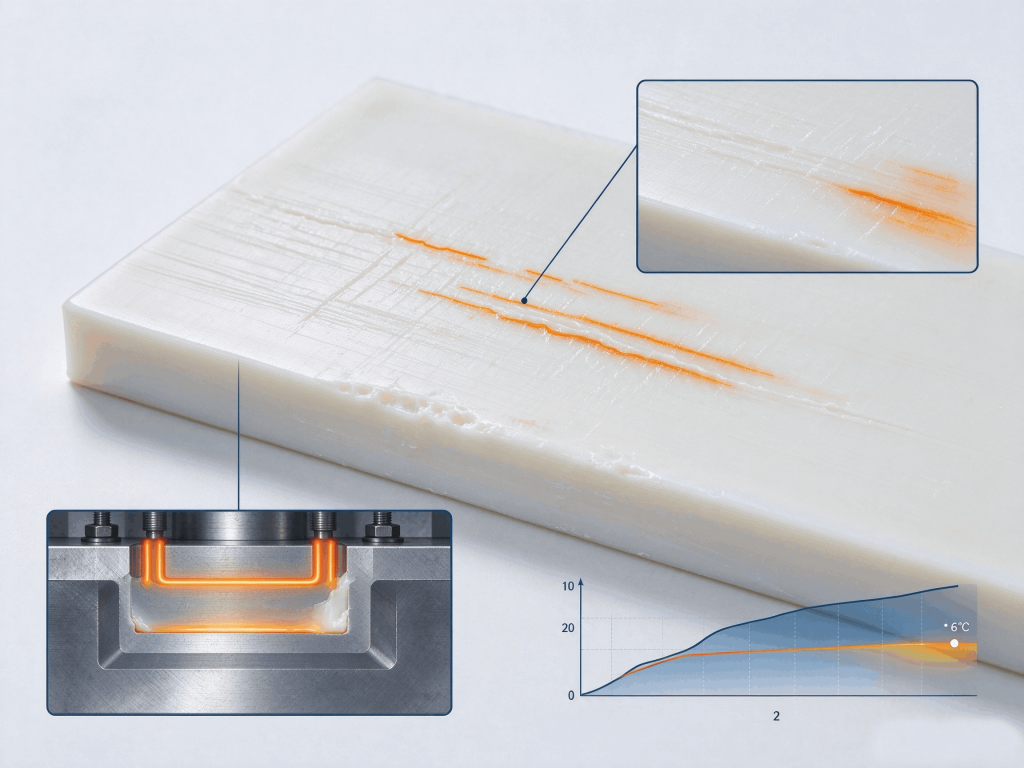
1. Cold Lines: Caused by Low Mold Temperature and Poor Flow Fusion
Cold lines appear as linear marks on the casting surface. The converging melt fronts fail to fuse well. Parts with cold lines have poor toughness and tend to crack along the marks under load.
1.1 Mold temperature adjustment
The common mold preheating range for MC nylon is 160℃ to 180℃. When mold temperature is too low, the melt cools quickly once touching the mold wall, loses flowability, and new incoming melt cannot merge fully with the existing flow front, leaving cold lines. If cold lines mainly appear on far ends or corners, raise mold temperature gradually by 5℃ each time. Avoid sharp temperature rise. Do not heat above 190℃, because excessive temperature leads to fast local polymerization, high internal stress and later cracking. Use higher mold temperature for thick-walled and large-size parts such as nylon wheels and bushings; lower mold temperature for thin-wall small castings.
1.2 Matching pouring speed
Do not simply speed up pouring when mold temperature is low. High speed causes turbulent flow and entraps air. Slow down pouring moderately, let the liquid spread steadily and fill layer by layer, so that melt fronts can fuse sufficiently. If mold temperature is already within the target range but cold lines remain, adopt segmented pouring: low speed at the gate, moderate speed in the middle cavity, and slow down again near the end of filling to reduce flow junction marks.
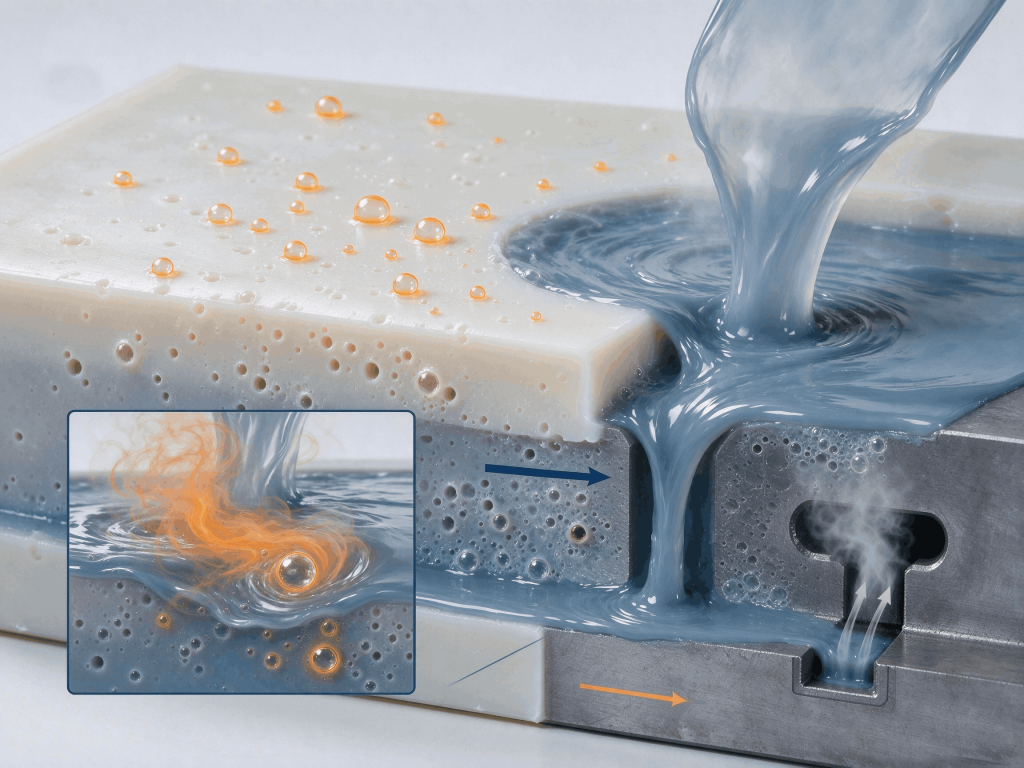
2. Bubbles: Caused by Excessive Pouring Speed and Trapped Air
Bubbles include surface blisters and hidden subsurface pores, mostly from air entrapment. The viscosity of MC nylon melt rises continuously during polymerization. Once air is wrapped inside, it is hard to float out.
2.1 Pouring speed adjustment
Excessive pouring speed is the top cause of bubbles. Fast feeding creates turbulence and traps cavity air inside the melt. When bubbles occur, reduce pouring speed first. Fill the cavity in stable laminar flow and let air escape through vents. However, pouring speed cannot be infinitely slow. Too slow filling makes the melt pre-polymerize and thicken halfway, which triggers cold lines instead. The key balance point: slow enough to avoid air entrapment, fast enough to prevent premature solidification.
2.2 Mold temperature matching for bubble control
Properly raising mold temperature extends the low-viscosity window of melt, helping air escape. But over-high mold temperature accelerates polymerization, shortens the working window and locks bubbles inside. Always adjust pouring speed and mold temperature together; tuning only one parameter rarely works well.
3. Auxiliary Factors (Speed and Temperature Alone Are Not Enough)
3.1 Mold venting: Well-designed vents at flow terminals and high positions are essential. Good parameters cannot eliminate bubbles without effective venting.
3.2 Raw material preparation: Caprolactam monomer must be fully dehydrated. Moisture directly generates foam pores. Weigh catalyst and activator accurately.
3.3 Equipment stability: The casting machine shall deliver steady and uniform output. Pulsed, unstable flow easily causes alternating bubbles and cold lines.
3.4 Uniform heating: Zoned mold temperature control is recommended to avoid uneven cooling.
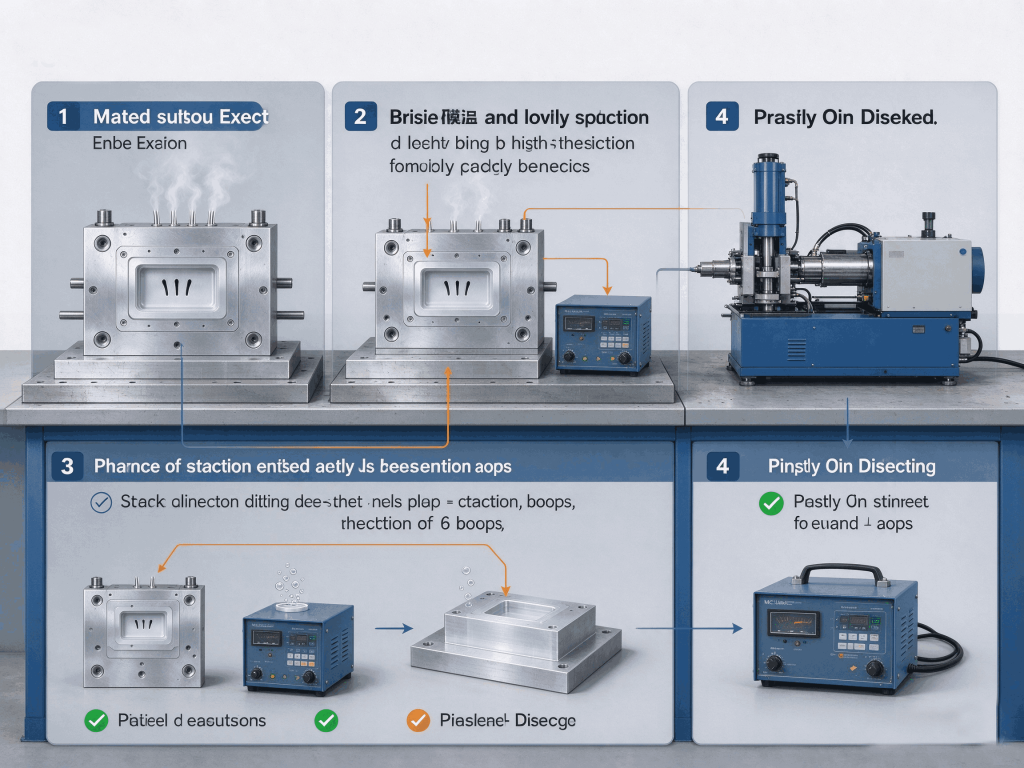
4. Recommended On-site Debugging Sequence
4.1 Check mold vents and ensure they are unblocked;
4.2 Set baseline mold temperature at 170℃ and start with low, stable pouring speed;
4.3 Identify dominant defect: Cold lines → slightly increase mold temperature and test segmented pouring. Bubbles → reduce pouring speed and fine-tune mold temperature;
4.4 Change only one parameter each test, confirm stability before next adjustment. Too many variables make troubleshooting difficult.
5. Summary
Bubbles and cold lines on MC nylon castings result from mismatched cooling rate, air escape rate and polymerization rate. Cold lines are mainly related to insufficient mold temperature and poor melt fusion. Bubbles are mostly from air entrapment due to fast pouring.
Reasonable matching of pouring speed and mold temperature, together with stable casting equipment and proper mold venting, greatly reduces surface defects and improves qualification rate of MC nylon wheels, bushings and sliding blocks. Wenzhou Feilong MC nylon casting equipment features stable flow output and precise temperature control, convenient for technicians to test and lock process parameters for mass production.
 FEILONG PU MACHINE