Why purchase a polyurethane elastomer (CPU) pouring machine? To achieve large-scale production of elastomer products and obtain uniform and stable high-quality products, using mechanical pouring instead of manual pouring has become an inevitable trend in the development of elastomers. The obvious advantages of mechanical pouring over manual pouring are: (1) Increase production efficiency and reduce production costs: Generally, it can increase production efficiency by 5-8 times and reduce raw material consumption by 5-10%. Since elastomer raw materials are relatively expensive, for production units with a certain output, the investment in the pouring machine can be recovered quickly within a short period of time. (2) Improve the quality rate of products. In manual production, due to human factors and the technical level or responsibility of the operator, the quality rate is generally around 80%. After using mechanical pouring, under normal production conditions, the quality rate can be guaranteed to be above 98%, especially for key products with higher requirements, the quality rate is a key factor for obtaining substantial benefits.
What are the advantages of domestic machines compared to imported ones? After more than ten years of development and continuous improvement, the sixth-generation CPU pouring machine has been produced. Its main performance has reached or exceeded that of imported equipment. Compared with imported machines, domestic machines have the following advantages: (1) “Tailor-made” production according to user requirements to produce equipment that meets process conditions and is efficient and practical, enabling users to obtain substantial benefits. (2) Utilizing timely and effective after-sales services to promptly solve problems encountered by users. (3) Long-term provision of low-cost high-quality spare parts, without the need to purchase expensive imported equipment due to high spare part prices, so that equipment can be “affordable to buy but not affordable to maintain”. (4) Due to the lower cost of domestic equipment, when the performance is comparable to that of imported equipment, investment and maintenance costs can be significantly reduced. With the joint efforts of research, technology, raw materials and users, through hard work and continuous innovation, it is certain to contribute to the promotion and popularization of high-performance, low-cost and practical domestic equipment.
How is the development of domestic CPU pouring machines going? (1) The first generation: In 1989, a high-temperature CPU pouring machine was trial-produced in Wuhan. Based on the original production of polyurethane foaming machines, the heating system was strengthened (electric heating stainless steel hoses and heating elements were added to the pouring head and metering pump). Ordinary gear pumps were used as metering pumps, resulting in large temperature variations and inaccurate metering, and it could only be used approximately. (2) The second generation: In 1991, a high-temperature CPU pouring machine was trial-produced in Jiangsu Jianhu. The metering pump had already adopted a low-speed high-precision metering pump, which significantly improved the metering accuracy. However, the heating system and electrical control were still not very stable, with a high failure rate. Some manufacturers in other places produced this model in 2000, which was difficult to ensure the long-term stable production of users. (3) The third generation: From 1994 to 1999, high-temperature CPU pouring machines produced in Nantong, Handan, Datong, Panzhihua and other places adopted digital display instruments and export-type electrical components, significantly improving the reliability of electrical and control. However, the heating system and temperature control were still not very stable. Through these years of production, debugging, improvement and practice, we have realized that the basic requirements for an excellent high-temperature CPU pouring machine should be: ① Accurate metering: The error of the mixing ratio should be less than 0.5% ② Uniform mixing: Ensure that the two raw materials fully react ③ Stable temperature: The temperature control error should be less than ±2℃ ④ No bubbles visible on the macroscopic surface of the product (Due to the special designed mixing head, it has been repeatedly proven that no bubbles will be generated during the mixing process) (4) The fourth generation: From 1999 to 2000, high-temperature CPU pouring machines produced in Shenzhen and Yongkang (such as CPU205 type) have basically solved the key technical problems and can initially meet the above four requirements. However, there are still many shortcomings (few major problems, many minor problems). If the operation is not slightly careful, it is easy to cause faults and produce defective products. Most second-hand pouring machines are of this type. (5) The fifth generation: Since 2000, it has been put into production in Wenzhou Feilong Company. It is a major improvement based on the fourth generation: ① Improved the structure of the material tank, changing the stirring speed of the A material tank from fixed speed (23 r.p.m) to adjustable continuously (18~90 r.p.m). At low speeds, it can stabilize vacuum degassing, and at high speeds, it is convenient for the polymerization reaction of the polymer. The vacuum system has been improved (the vacuum pump is installed inside the machine). The shaft seal of the material tank has been changed from the ordinary type to a precision mechanical seal, which can ensure no change for one hour under vacuum conditions, playing a key role in the macroscopic absence of bubbles in the CPU products. ② Improved the metering accuracy, reasonably configured the material tank, metering pump and pouring head, increased the pipe diameter, reduced the bends, eliminated the possibility of blockage of the raw materials in the double-layer casing of the material and heat transfer oil, and changed the connecting pipe of the heat transfer oil from rubber hose (not resistant to high temperature) to stainless steel hose (can be used for a long time without damage). ③ The pouring head structure is more reasonable and compact: Ⅰ. Adopted the patented “precise reflux regulating valve” of our company, which increases the diameter of the B material pipe, ensuring no blockage, and is sensitive and reliable in operation. Ⅱ. Designed a special structure of precise shaft seal device, which can prevent the mixture from flowing upward, ensuring long-term reliable use. Ⅲ. Reliable pneumatic cleaning device, ensuring that the mixing chamber is clean after each pouring (no leakage, no residual cleaning liquid) so that the next cycle of pouring can proceed smoothly. Ⅳ. Mixing head: Adopted a conical tooth type mixing head. Domestic practice has proved that this mixing head is simple, practical, and ensures uniform mixing without bubbles, and by changing the diameter of the outlet hole of the funnel, the residence time of the mixture in the mixing chamber can be adjusted. ④ Improved control and electrical equipment: Changed from time relay control to full computer full digital instrument control, greatly improving the reliability and operability. (6) Sixth Generation: In 2001, based on the requirements of different users and through continuous practice and improvement, the structure became more compact, the configuration was more reasonable, the floor space was reduced by 25%, the operation became more convenient, and the maintenance became simpler. The prototype mass production can rival imported equipment and is currently the most ideal CPU high-temperature pouring machine.
Is purchasing second-hand machinery worthwhile? (1) How did a large number of second-hand pouring machines come into existence: From April to October in 2000, the colored transparent wheels for skateboards made of polyurethane elastomer became the best-selling products in coastal provinces such as Zhejiang and Guangdong. (In Yongkang City alone, there were nearly a hundred factories producing skateboard wheels.) Orders came in like snowflakes, and many factories that had never produced polyurethane before also rushed to purchase equipment to organize production. Some factories that originally could only produce one or two sets of equipment per month now produced over twenty sets in a month. Some equipment manufacturing factories that had never produced elastomer pouring machines also produced a large number of pouring machines to meet the urgent sales needs. Now it seems that the pouring machines produced at that time were mostly poorly made due to the rush to meet the deadline. (2) Technical content and material value ① Why is the price of high-temperature pouring machines about twice that of medium-temperature pouring machines? Actually, the materials and accessories are not much different, but the structural requirements and technical difficulties are quite different. Therefore, users buy the technology rather than the materials and accessories. ② How is the actual value of a hand pouring machine? The total value of the materials, processing fees, and accessories of a polyurethane elastomer pouring machine is no more than 50,000 to 60,000 yuan (accounting for 30% to 35% of the selling price). Why is the selling price more than twice as much? Equipment manufacturers need to make a large investment during the development and trial production process, including various expenses, three guarantees and after-sales service expenses (often 5% to 10%), operation and advertising expenses, etc. Therefore, the actual net profit is only 15% to 20%. When purchasing second-hand pouring machines, only the value of the materials and accessories should be considered. So, spending 30,000 to 40,000 yuan to purchase a pouring machine that originally cost 200,000 yuan is not a good deal. I. The value of the materials and accessories of the used pouring machines is at most 10,000 to 20,000 yuan; II. At that time, due to meeting sales demands, the processing was rough, the quality was poor, and the price was high. In addition, due to long-term non-use, it could only be used after major repairs; III. The ones produced at that time were the fourth generation, while the ones produced now are the sixth generation. The technical requirements and structures have changed significantly; IV. Second-hand pouring machine manufacturers do not offer three guarantees and warranties. The trouble and losses caused to users by them often amount to tens of thousands of yuan. Therefore, purchasing second-hand equipment may save several thousand yuan now, but the losses caused to production in the future cannot be compensated by these few thousand yuan.
How to select a CPU pouring machine according to the process requirements? (1) Three processing methods for polyurethane elastomers: ① Blending type (solid elastomer that requires cross-linking) (MPU) It can be processed using general rubber equipment. The raw rubber is made by the polymerization reaction of polyester or polyether with diisocyanate. When the diisocyanate is in excess (R = 1.0 – 1.1), the end groups of the raw rubber are isocyanate groups. When the polyester or polyether is in excess (R = 0.7 – 0.99), the end groups of the raw rubber are hydroxyl groups. The raw rubber is mixed with water, binary alcohols, or diisocyanates, and then additives such as carbon black and auxiliaries are added. After mixing and high-temperature curing by a compounding machine, the finished product is obtained. ② Thermoplastic type (thermoplastic elastomer that does not require cross-linking) (TPU) It can be processed using general plastic processing methods (injection machine). ③ Pouring type (liquid pouring elastomer that requires cross-linking) (CPU) Due to its fluidity, it can be made into parts with complex geometries, the product reproduction is strong, the hardness adjustment range is wide, and the comprehensive performance is excellent. Therefore, its output accounts for more than 70% of polyurethane elastomers. (2) Two types of elastomer pouring machines: ① Alcohol cross-linking polyurethane elastomer pouring machine is usually of medium-temperature type, with a working temperature of 50 – 60℃, and the designed mixing ratio A : B ≈ 1 : 1. Its working situation is similar to that of a general polyurethane sole machine (it can only produce low-hardness products, while in China and abroad, high-hardness polyurethane elastomers are mainly needed). ② Amine cross-linking polyurethane elastomer pouring machine: It is of high-temperature type, with a working temperature of A group: 60 – 100℃; B group: 110 – 120℃ (using MOCA as the cross-linking agent), the designed mixing ratio: A : B = 100 : 8 – 16. (3) Three types of equipment for producing CPU: ① High-pressure machine: It uses high-pressure metering (15 – 25 Mpa) to collide and mix. The high-pressure push rod self-cleaning pouring head (after each pouring, no solvent is needed to clean the mixing chamber), since the pouring type elastomer pouring machine has a significant difference in flow rate, viscosity, and mixing ratio between the two components, to achieve high-pressure collision mixing, it is required that the flow velocity entering the mixing chamber > 150 m/s, then the liquid flow hole is very small (especially for the MOCA component), which is prone to cause material liquid blockage and cannot ensure normal production. Currently, high-pressure machines have not been used in CPU production at home and abroad. ② High-speed machine: It uses medium-pressure metering and high-speed screw mixing (n > 15000 r.p.m). The high-speed conical screw’s advancement scrapes the mixing chamber (no solvent cleaning is needed), with high automation. (such as the DESMA production in Germany uses a high-speed machine), but the structure is complex, with extremely high requirements for materials and processing accuracy, and high requirements for operators and maintenance personnel. According to the current basic industries in China (materials, heat treatment, and processing accuracy), it is still difficult to batch-produce qualified such equipment. ③ Low-pressure machine: It uses low-pressure high-precision metering pump and mechanical stirring mixing, with solvent automatic cleaning. When the viscosity and mixing ratio of the two components are significantly different, it can also meet the process requirements. Currently, most CPU production in China and abroad mostly uses this type of machine.
What are the purposes for purchasing a CPU pouring machine? Each user has two basic requirements for purchasing equipment: a high rate of quality products and a low rate of malfunctions. (1) How to achieve the highest quality rate: ① Qualified raw materials and appropriate process; ② Superior equipment performance, stable and reliable operation; ③ Reasonable mold design, conducive to the smooth flow of the pouring material and the elimination of bubbles; ④ Correct operation methods (able to adopt the appropriate pouring process for different molds), and be able to quickly eliminate abnormal phenomena according to the instructions and operation procedures when they occur. (2) How to minimize the equipment failure rate: ① The selected equipment can adapt to the used raw materials (meet the required process conditions). ② Advanced equipment, reasonable configuration, simple structure, excellent material quality, convenient operation, and easy maintenance; ③ Operators or maintenance personnel can perform regular maintenance or replace worn parts according to requirements, and handle short (long) term shutdowns in accordance with the instructions (or operation procedures). When the equipment has abnormal phenomena, it should be carefully analyzed and promptly handled (if the user is unable to handle it, they can consult the production company or request an employee to handle it).
What constitutes a high-temperature type elastomer pouring machine of good quality? (1) Precise measurement (2) Uniform mixing (3) Stable temperature (4) No visible bubbles on the surface
Key components of the CPU pouring machine? (1) Tank: An acid-resistant stainless steel inner liner welded by argon arc welding, equipped with a spiral baffle heating jacket, and an outer polyurethane foam insulation layer, achieving constant temperature and energy conservation. To prepare the pre-polymer and for vacuum degassing, tank A is equipped with a variable-speed mixer (18-90 r.p.m.) and high-precision shaft seal to ensure its airtightness. (2) Metering pump: A low-speed high-precision metering pump, surrounded by heat transfer oil to ensure constant heating temperature. By adjusting its speed, the flow rate of the original liquid and the mixing ratio of A and B can be changed. Due to the low speed, the manufacturing precision of the pump must be extremely high, and the material must be extremely hard to extend its service life. (3) Pouring head: Within the range of required pouring volume and mixing ratio adjustment, it can mix evenly without generating bubbles, using constant temperature heating by heat transfer oil. (4) Control section: Pressure, temperature, and speed are all displayed by digital meters. The pouring volume (pouring time) and air injection, liquid washing are all automatically controlled by the computer programmer.
Production process of high-temperature polyurethane elastomer? (1) Preparation of pre-polymers (can be completed in tank A or a separate reaction vessel): ① Add the synthesized pre-polymer to tank A: Use the existing equipment and process to dehydrate the polyol, synthesize the pre-polymer, and perform vacuum defoaming to obtain the pre-polymer with the required NCO content. Generally, the pre-polymer can be added to tank A through the feed port and undergo vacuum degassing for 10 to 40 minutes (including 3 to 5 minutes of degassing in the circulating state of A material). If the pre-polymer for casting large products has been degassed, it can be introduced into tank A through the reflux port (no need for further degassing). ② Synthesize pre-polymer in tank A (T + P method) (add polyol to diisocyanate): Add a quantitative amount of isocyanate to the stirred tank A and add the dehydrated polymer polyol. Keep the system temperature below 80°C, and maintain the reaction for 1 to 3 hours until the NCO reaches the required value. Perform defoaming at 5 to 10 mmHg vacuum for 10 to 40 minutes as a standby for casting. This method is recommended by Japan and the polyurethane elastomer manual, and also conforms to the design requirements of the CPU20F elastomer casting machine. (The stirring speed in tank A during synthesis is 60 to 90 r.p.m., and during degassing, the stirring speed is 20 to 25 r.p.m. Therefore, the use of variable-speed stirring in tank A can meet the above requirements). ③ Synthesize pre-polymer in tank A (P + T method) (add diisocyanate to polyol): Add a quantitative amount of dehydrated low-polymer polyol to the stirred tank A and add a quantitative amount of diisocyanate while stirring (n = 60 to 90 r.p.m.). Keep the system temperature below 80°C, maintain the reaction for 1 to 3 hours, until the NCO reaches the required value, and perform defoaming at 5 to 10 mmHg vacuum for 10 to 40 minutes (stirring speed 20 to 25 r.p.m.), which can be used as a standby for casting. This method is commonly used by various domestic manufacturers. If using tank A for polyol dehydration, an additional cold and hot oil tank should be added. To reduce the viscosity of the original liquid for easier dehydration, the material temperature should reach 100 to 130°C. After dehydration, to control the reaction between the polyol and diisocyanate, the polyol should be cooled to 60 to 70°C. (2) Casting by the casting machine: Add B material to the B material tank, [if pigments or other auxiliary materials are required, it is best to dissolve MOCA (<115°C) and mix them with it before adding to the B tank]. Each of the A and B liquids circulate and reach the required temperature. Adjust the mixing ratio according to the formula requirements (repeatedly measure three times or more), operate the casting button (the casting time can be controlled by the computer program controller), when the A and B materials are uniformly mixed in the mixing chamber and there are no bubbles in the transparent hose, start the casting (the mold should be coated with a release agent and heated to 90 ± 10°C, and attention should be paid to the casting method to avoid bubble formation). If the time between two castings exceeds 1 minute (refer to the shelf life of the kettle), use the cleaning solution (chloroform, trichloroethylene, etc.) to automatically clean the mixing chamber (automatically controlled by the computer program controller). When the casting stops, the A and B liquids will automatically switch to the reflux circulation. (3) Initial curing and demolding: Perform initial curing in the drying tunnel or oven on the production line (temperature 100 to 120°C, time 0.5 to 1 hour), allowing it to set and then demold. Clean the mold, apply a release agent, and then heat it for one week and casting. (4) Post-curing: After the product passes the initial inspection and sorting, it is subjected to 4 to 5 hours of post-curing in the oven at 100 to 120°C, and then cooled to become the finished product.
What are the systems of the polyurethane elastomer pouring machine? (1) The raw material system: A and B are independent of each other. The raw material flows from the tank through the discharge valve, filter, metering pump to the pouring head, then returns to the tank through the return valve. They all operate within the heat transfer oil environment to maintain the required temperature. The entire system must be airtight to prevent air leakage and avoid damaging the vacuum or causing the raw material to deteriorate. (2) The heat transfer oil system: A and B are independent of each other. The heat transfer oil in the tank is transported by the circulating pump to the tank, passing through the lower tube and block of the tank, heating the discharge valve, filter and metering pump, then to the pouring head, and returning to the tank through the tube. (3) The vacuum system: The tank is connected to the vacuum buffer tank through the vacuum pump, and the vacuum pressure gauge on the tank can display the vacuum degree. The pipelines should be as short as possible, with few joints and valves to prevent air leakage, and it is required to be shock-resistant. They are connected by flexible tubes in the middle. (4) The compressed air system: Compressed air (6-8 kg/cm2) from the air compressor (provided by the user) is divided into three paths by the water separator and pressure regulating valve: ① The compressed air containing oil mist flows to the D63 cylinder of the pouring head for the “return” and “pouring” switches to operate and the D50 cylinder to control the cleaning switch. ② It is used for the air injection after pouring at the pouring head. ③ It is sent to the cleaning liquid tank for the transportation of cleaning liquid. They are all automatically controlled by the computer controller through the solenoid valve. (5) The cleaning liquid system: The cleaning liquid tank is equipped with a liquid level gauge, pressure gauge and vent valve. The cleaning liquid passes through the filter, one-way valve, and electromagnetic valve to the cleaning switch of the pouring head. It enters the mixing chamber synchronously from the A and B discharge ports. The computer controller controls it automatically for liquid washing or air injection.
What are the requirements for the production units of the CPU elastic body pouring machine? (1) They should have strong capabilities in development, design and trial production, and be able to meet the users’ process and special requirements based on the final production. (2) They should be able to provide detailed solutions to various problems related to the production of CPUs by users, and some supply units claim in their advertisements that they have passed ISO quality certification and have strong technical strength. In fact, they know nothing at all, not even having any technicians who are somewhat knowledgeable. They can’t even develop and improve new products. They can only be consistent for several years without any progress. (3) They must have certain equipment processing capabilities and corresponding equipment and conditions, be able to supply goods on time, and for special requirements of equipment, they can conduct tests and deliver after passing the tests. (4) They should have strong debugging or after-sales service capabilities, have strict documentation management systems for related spare parts and accessories, create conditions for long-term provision of accessories for the future, and ensure that the majority of users can use and maintain them stably for a long time. The key lies in the quality of the machine itself, whether the design and manufacturing focus on reducing equipment failure rates. If the equipment itself has many failures, even if personnel are stationed permanently at the user’s site to repair every day, what use is it? (5) Provide users with a complete set of relevant technical materials and be able to train operation and maintenance personnel for users. (6) Integrity: Integrity is the foundation for the survival and development of an enterprise. It provides a good start for long-term cooperation between the supplier and the user. The supplier can achieve a win-win situation only if they always regard the user as “God”. The development of the enterprise and the continuous improvement of products depend on the enterprise’s own efforts, the guidance of scientific research units, and the support of the majority of users.
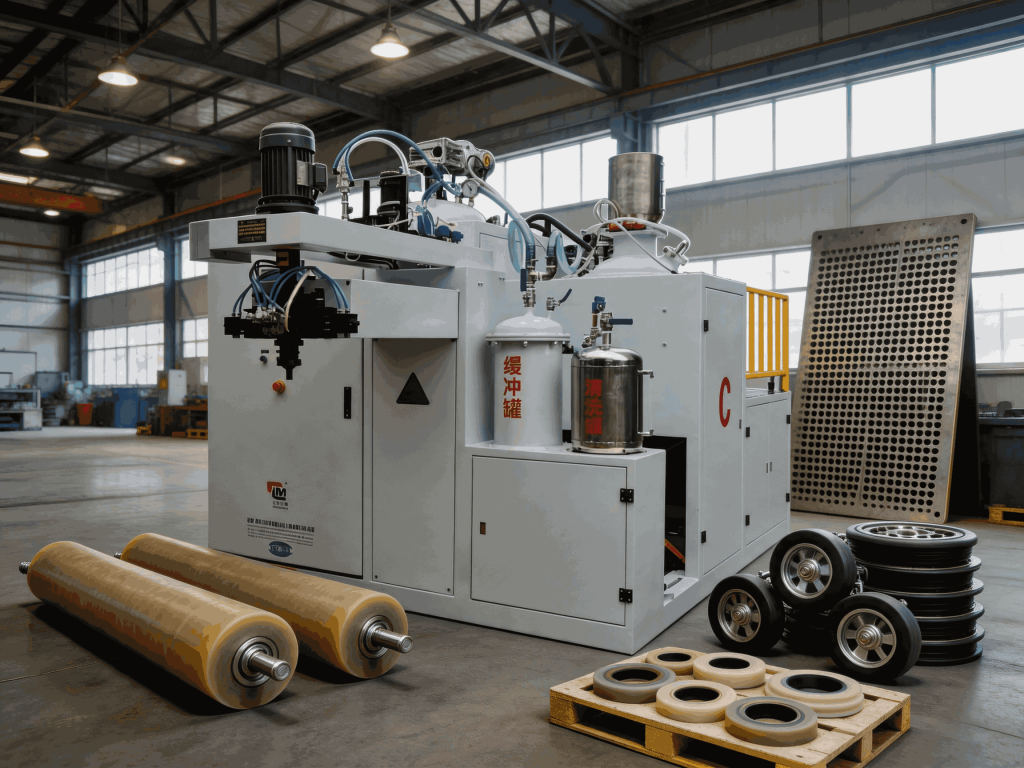
 FEILONG PU MACHINE